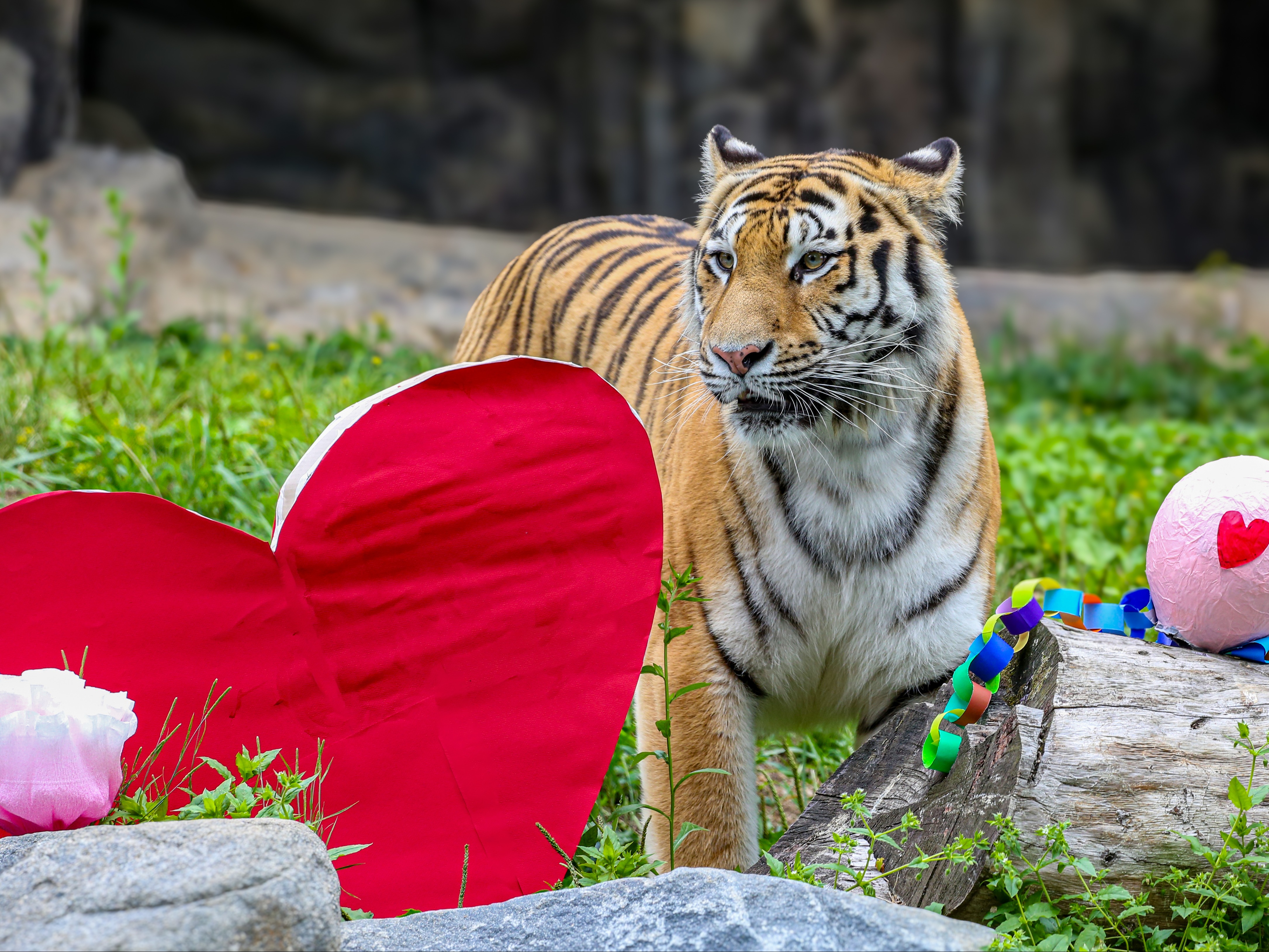
A journey between South Korea and Ohio is significant for any traveler. For Sarang, a 4-year-old female Amur tiger, it required two years of careful planning, international cooperation, specialized transportation, and a global team dedicated to her wellbeing.
Sarang arrived safely at the Columbus Zoo from Seoul Zoo in the early hours of July 16, 2026—accompanied by a team from the Columbus Zoo, who traveled across the globe to make the trip with her. Her safe arrival marked the completion of an extraordinary journey and an important step toward protecting one of the world’s rarest big cat species.
Her move brings together conservation professionals across countries and continents to support a shared goal: creating a stronger future for Amur tigers.
Two Years of Planning for One Important Journey
Sarang’s journey began long before she boarded a plane.
Her transfer was recommended in 2023 through the World Association of Zoos and Aquariums’ (WAZA) Global Species Management Plan for Amur tigers. This international program helps participating zoos maintain healthy and genetically diverse populations of endangered species in professional care.
From there, teams at Seoul Zoo and the Columbus Zoo began coordinating the many details required to safely move a tiger across the globe.
The process included veterinary preparations, international permits, transportation planning, coordination with wildlife authorities, and arrangements designed around Sarang’s needs. Columbus Zoo team members accompanied her throughout the journey from South Korea to Ohio, monitoring her wellbeing and helping her remain comfortable during each stage of travel.
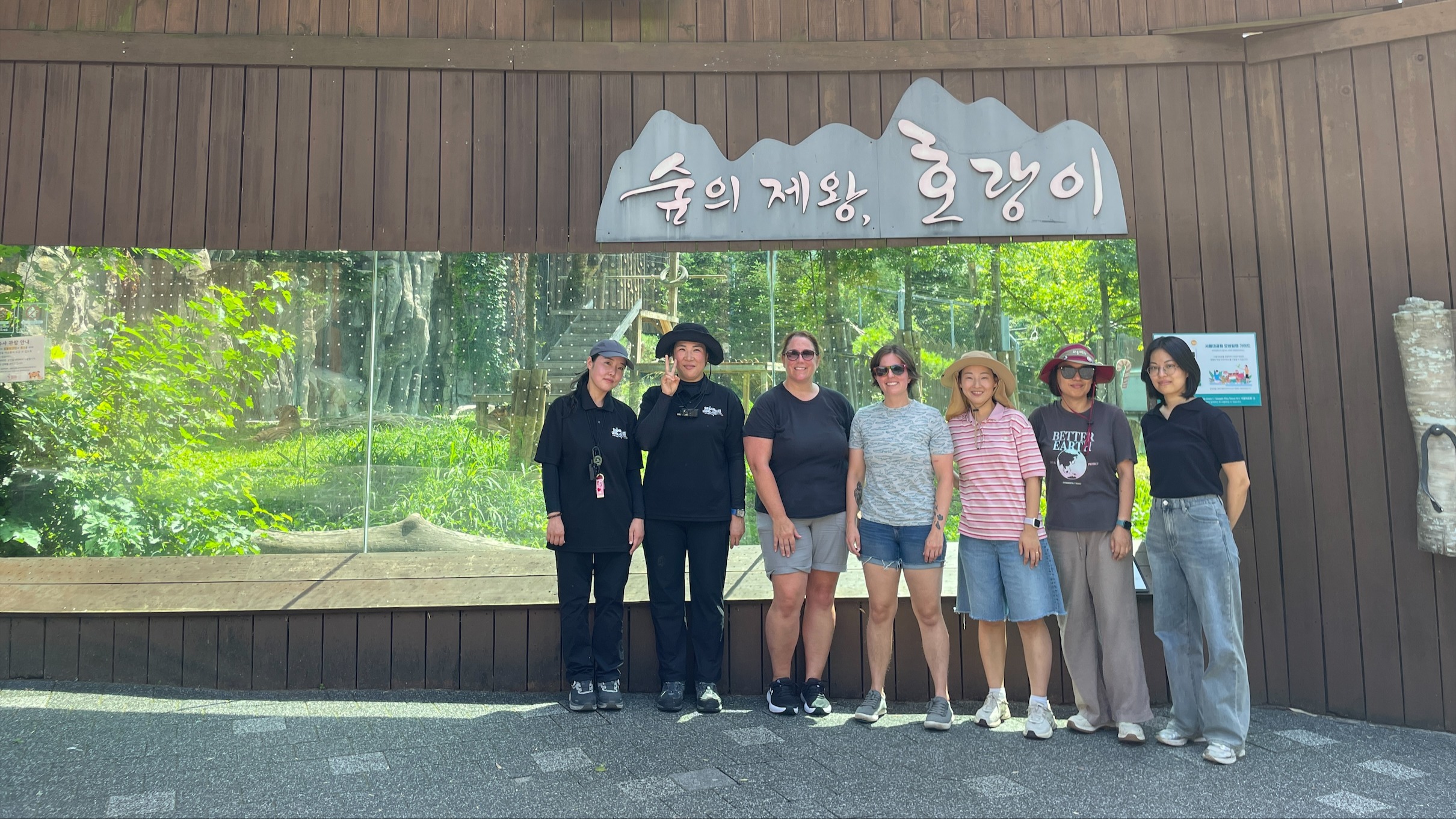
"It was incredibly impactful to meet Sarang in South Korea and accompany her all the way to Columbus," said Dr. Caitlin Hepps Keeney, veterinarian at the Columbus Zoo. "Throughout the trip, we watched her closely, responded to her needs, and worked to keep each stage as calm and comfortable as possible. I'm grateful to everyone who put in countless hours of planning that made this trip possible!"
Every decision, from the route she traveled to the timing of each connection, was carefully planned to reduce travel time and support her safe arrival.
DHL Express Helps Bring the Journey Together
Moving an endangered tiger across continents requires specialized knowledge, a trusted international network, and precise coordination.
DHL Express worked alongside the Columbus Zoo and Seoul Zoo to coordinate Sarang’s time-sensitive transportation from South Korea to Ohio. The company’s logistics experts helped manage the international journey efficiently while keeping Sarang’s safety and wellbeing at the center of the process.
“DHL Express is honored to support global conservation efforts by helping transport endangered species safely around the world,” said Laurice Bancroft, Sr. VP of Operations for DHL Express Americas. “Moving an animal like Sarang requires much more than transportation. It requires careful planning, close collaboration, and the expertise of our international network.”
The Columbus Zoo is grateful to DHL Express for helping connect the organizations and professionals working together on Sarang’s behalf.
Why Sarang’s Journey Matters for Her Species
Sarang’s arrival supports two coordinated conservation programs working to protect the future of Amur tigers.
Both the Columbus Zoo and Seoul Zoo participate in the World Association of Zoos and Aquariums' (WAZA) Global Species Management Plan (GSMP), a collaborative program that supports the long-term conservation of Amur tigers. Sarang's transfer also supports the Association of Zoos and Aquariums' (AZA) Amur Tiger Species Survival Plan® (SSP), which helps maintain healthy, genetically diverse populations through coordinated breeding and transfer recommendations.
These programs use genetic records, family histories, animal health information, and population science to make thoughtful recommendations for each tiger. Moving an animal between participating institutions can introduce valuable genetics into a population and help preserve greater genetic diversity for future generations.
Sarang joins Lewis and Clark, two young Amur tiger brothers, who arrived at the Columbus Zoo earlier in 2026 through the SSP. Their individual arrivals are part of a carefully coordinated strategy designed to maintain a sustainable population of Amur tigers in professional care.
"Meeting Sarang in South Korea and traveling home with her was an experience I'll never forget. Every tiger has its own personality, and during the journey we began building the trust that will help her feel comfortable in her new home. She's part of an international conservation effort that extends far beyond one zoo, and it's exciting to know she'll help inspire guests while contributing to the future of her species,” said Laura McGlothlin, Assistant Curator of the Columbus Zoo’s Asia Quest region.
Healthy populations in accredited zoos also support conservation research, public education, and the expertise needed to protect the species.
A Species Facing an Uncertain Future
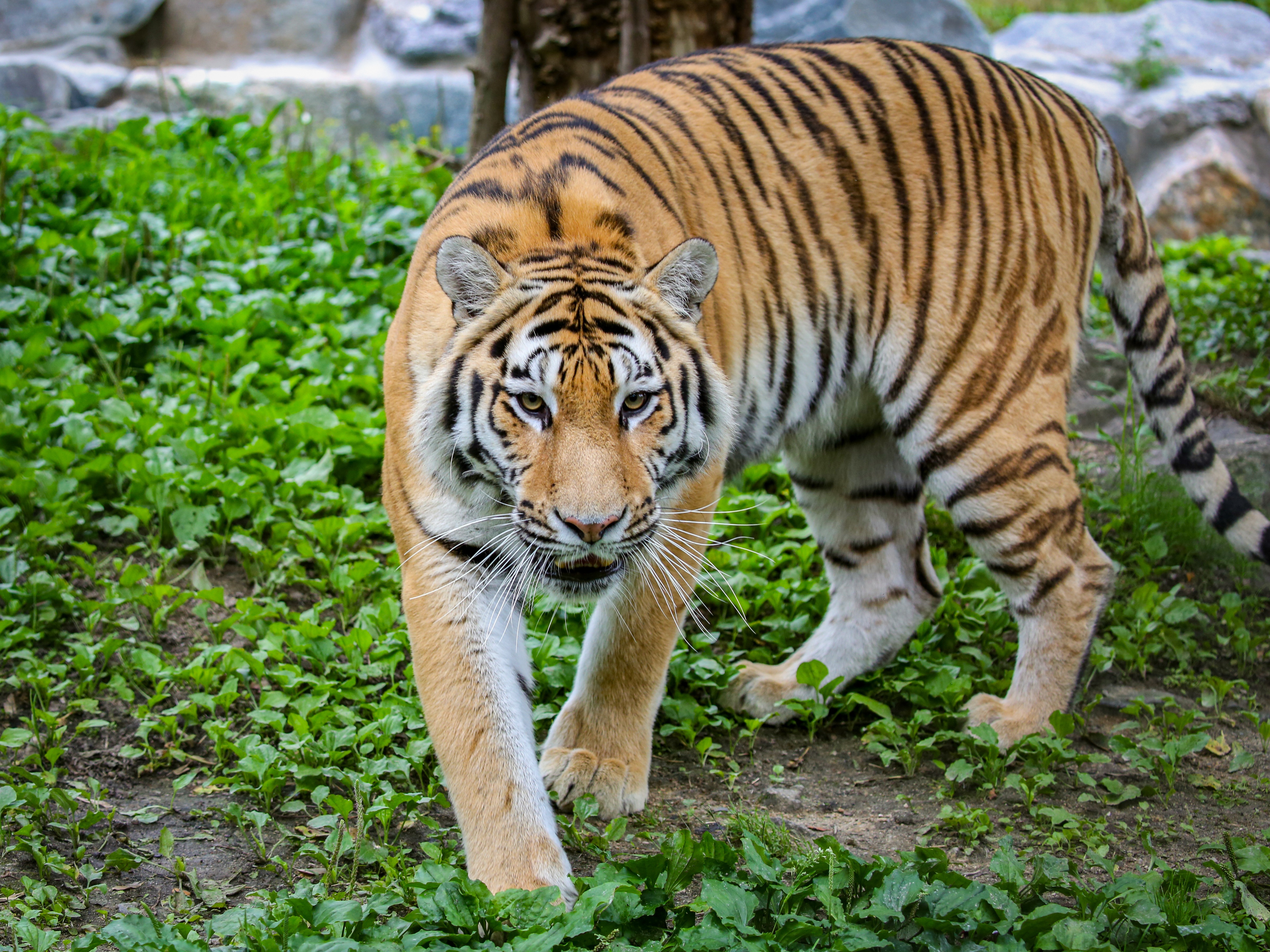
Amur tigers are the largest tiger subspecies and the only living tiger subspecies adapted to survive in cold, snowy climates. They are native to the Russian Far East and parts of northeastern China.
An estimated 500 Amur tigers remain in their native ranges. Habitat loss, poaching, and conflict between people and wildlife continue to place pressure on the species. International partnerships give conservation professionals the ability to combine animal care expertise, science, population management, and resources across borders. Sarang’s journey demonstrates how each organization can play an important role in a much larger conservation effort.
“We hope Sarang’s transfer to the United States will serve as an important milestone in securing a successful future for the Amur tiger,” said Park Jin-soon, Director of Seoul Zoo.
Welcome to Columbus, Sarang!
Following her arrival, Sarang began a routine quarantine and acclimation period under the care of the Columbus Zoo’s Animal Care and Conservation Medicine teams. This time allows team members to monitor her health, build relationships with her, and help her become familiar with her new surroundings. She will transition to her habitat in the Zoo’s Asia Quest region—separate from Lewis and Clark—when the team determines she is ready. Updates about when guests may have an opportunity to see her will be shared later.
To the Seoul Zoo team and everyone in South Korea who has followed Sarang’s story, thank you for the care and support that helped prepare her for this journey. The Columbus Zoo is honored to continue that care as her story enters a new chapter in Ohio.
From the professionals who planned her transfer to the teams working to protect Amur tigers in their native ranges and in professional care, Sarang’s journey represents the power of global cooperation.
Her arrival brings new possibilities for the future of her species, one carefully coordinated mile at a time.