They can leap 20 to 25 feet through the forest canopy. Their hands work almost like hooks. Their babies are born with completely white fur. And their digestive systems have something surprising in common with cows.
Colobus monkeys are full of fascinating adaptations, but there's another fact about these primates that deserves the world's attention: colobus are Africa's most threatened group of monkeys, so the Columbus Zoo is shining a spotlight on these remarkable primates, the threats they face in their native ranges, and the conservation work underway to help protect their future.
And with a newly-recognized species of colobus making international headlines this year, there's plenty to discover.
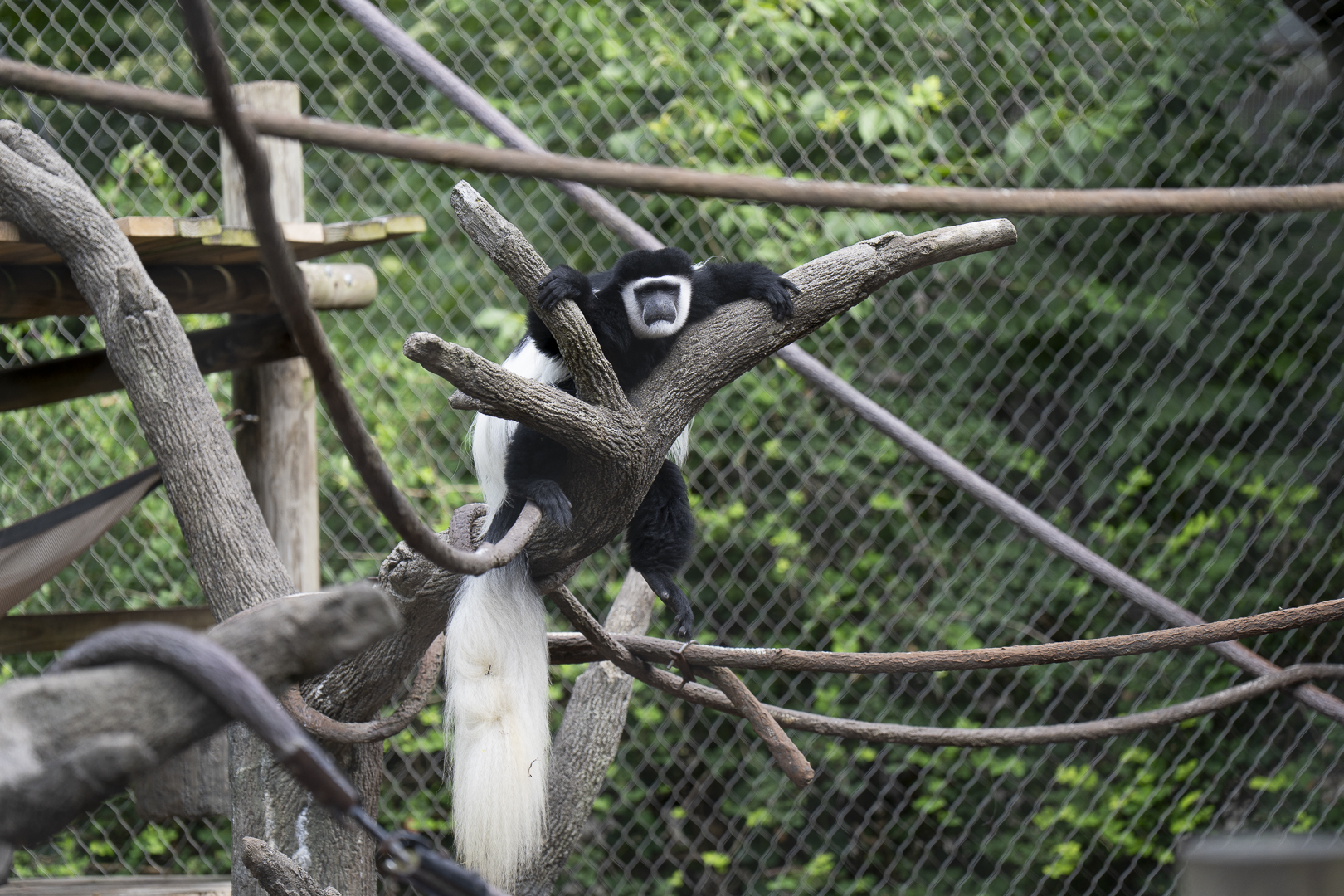
Meet the Colobus
There are 24 species of colobus monkeys, which can be divided into three distinct groups:
- Red colobus: 17 species
- Black-and-white colobus: 6 species
- Olive colobus: 1 species
Colobus monkeys range throughout western and central Africa, where they depend heavily on forests for survival. They are arboreal, meaning they spend much of their lives in trees, and their bodies have some incredible adaptations for life high above the forest floor.
One of the most unusual is found in their hands. Colobus are among the few primates that do not have fully-developed opposable thumbs. In fact, the word "colobus" comes from the Greek word kolobus, referring to their significantly-reduced thumbs. A colobus monkey's thumb can appear to be little more than a nub. Instead of grasping branches the way many other primates do, their elongated fingers and reduced thumbs allow them to use their hands almost like hooks as they move through the trees.
And when it comes to getting from one tree to another, sometimes a giant leap is exactly what is required.
Built to Leap
Colobus monkeys are impressive leapers, capable of jumping approximately 20 to 25 feet.
- They can use flexible branches almost like springboards, launching themselves through the forest canopy to reach another tree.
- Their long limbs and specialized hands help them navigate an environment where the next destination might be several body lengths away.
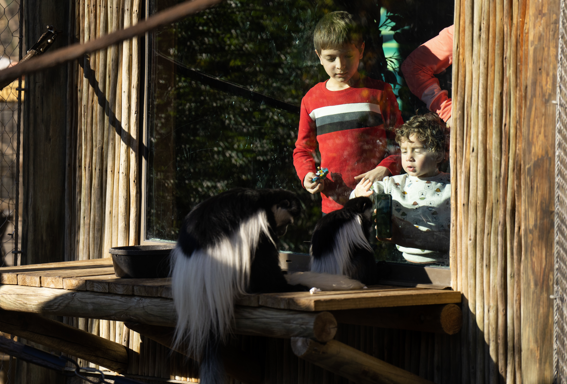
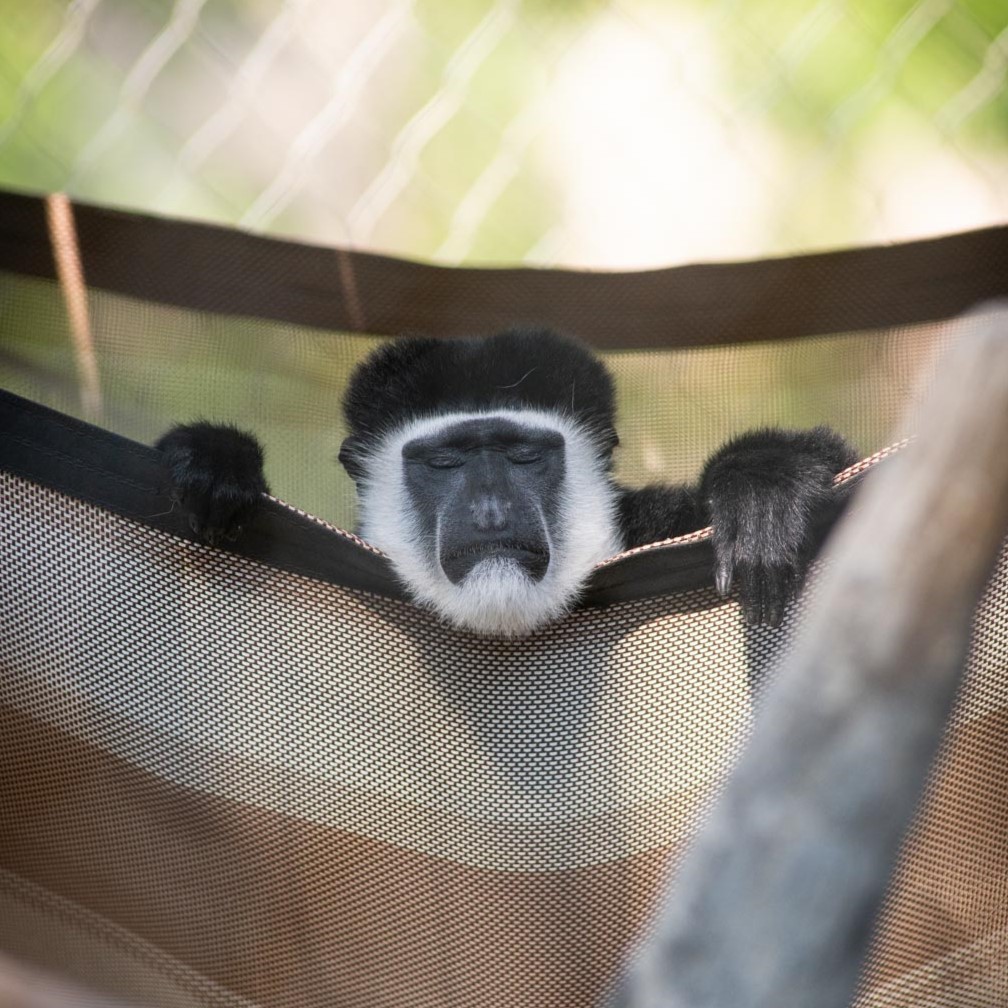
- Their striking appearance makes black-and-white colobus especially recognizable. Their dark coats are accented by long white fringe and long tails, creating a dramatic sight as they leap from branch to branch.
It's easy to understand why these monkeys have become so popular with Zoo guests.
A Very Leafy Menu
All of that activity requires fuel, but you won't find colobus monkeys hunting for a steak. Colobus monkeys are primarily leaf eaters, and their digestive systems are specially adapted to help them get the nutrients they need from tough, fibrous leaves. They have complex stomachs with three or four chambers that help break down their leafy diet. Their digestive system works in a way that is similar to that of a cow, allowing them to digest plant material that would be difficult for many other animals to process. At the Columbus Zoo, the diet of the colobus monkeys in our care includes specially prepared leaf-eater biscuits, browse, vegetables, and minimal amounts of fruit.
When a Baby Colobus Is Born, Everyone May Want to Help
Colobus family life is fascinating, too.
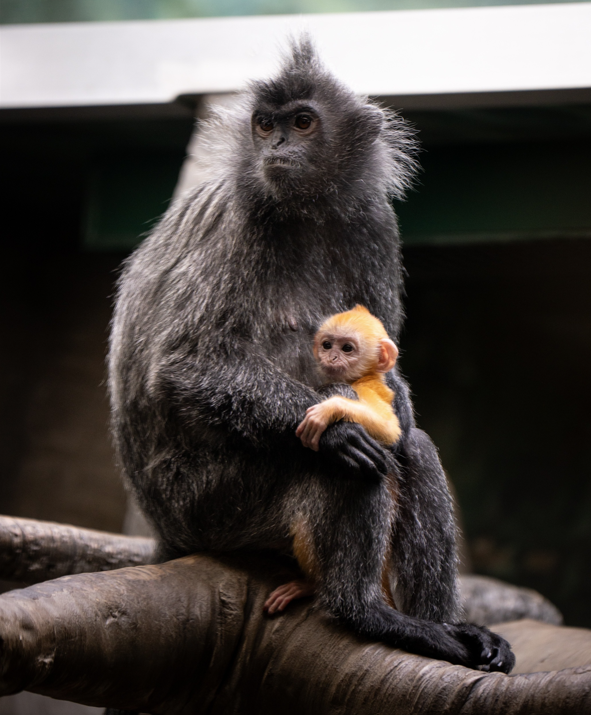
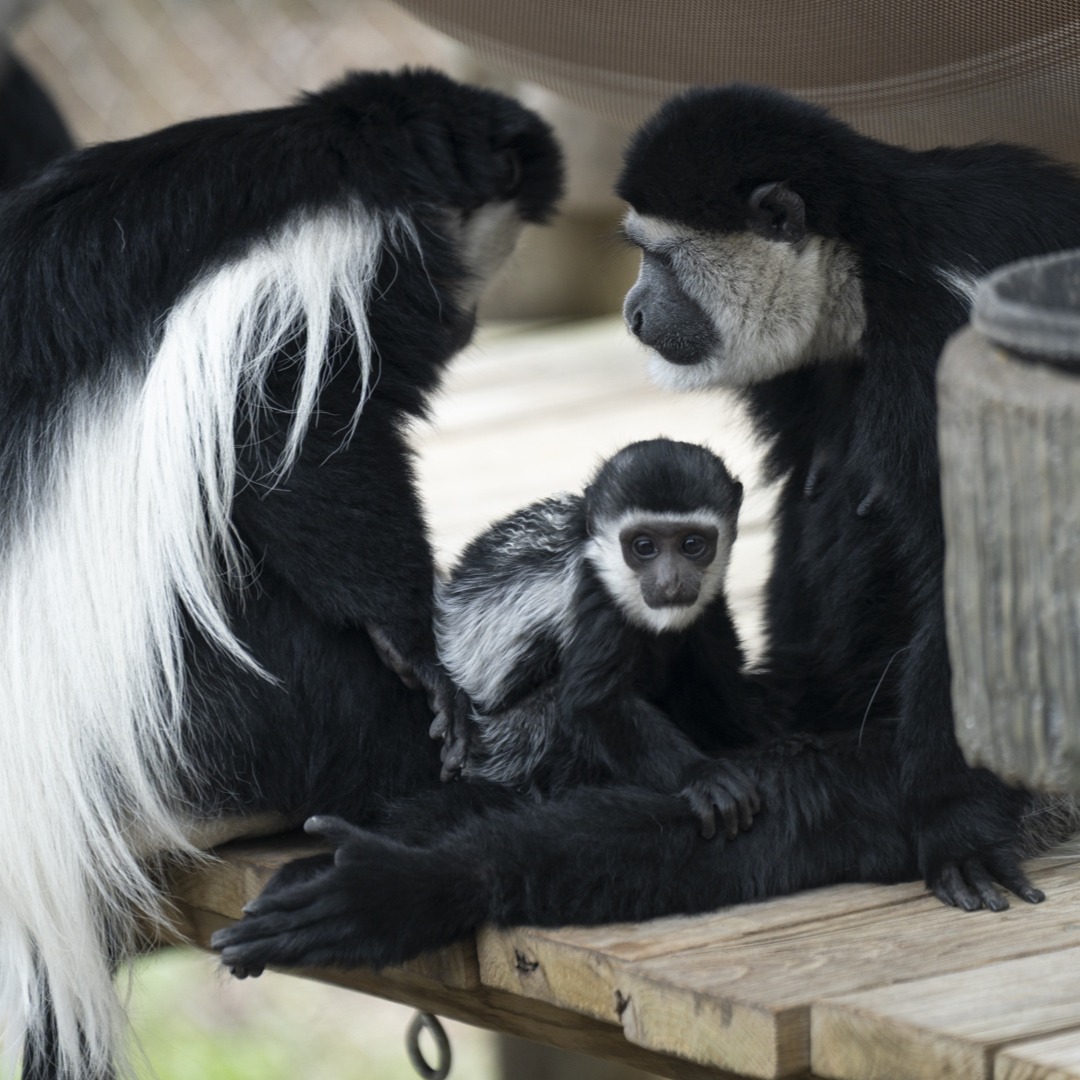
Females help one another with the care and rearing of offspring through a system known as alloparenting. A mother isn't necessarily the only female you'll see carrying her infant. Other females within the group may begin carrying a newborn a very short time after birth, sometimes within just hours.
And newborn colobus monkeys are particularly easy to spot: They're born almost completely white.
Researchers have theorized that the coloration could serve multiple purposes. When an infant is held against its mother's abdomen, its white fur may blend with the long white fringe covering her sides, potentially helping conceal the infant from predators. The bright white coloration may also make newborns particularly noticeable and attractive to other females within the group, potentially helping encourage alloparenting behavior. As the infant grows, that white coat gradually changes to the distinctive adult coloration.
A Conservation Crisis That Deserves Attention
As fascinating as these monkeys are, they are also facing serious challenges.
Colobus are Africa's most threatened group of monkeys, and 63% of colobus species are classified as Endangered or Critically Endangered. Because colobus are arboreal animals that depend on forests, the loss and fragmentation of those forests can have devastating consequences.
Habitat loss affecting colobus populations is driven by activities including:
- Logging
- Mining
- Charcoal production
- Agricultural expansion
- Human encroachment
Colobus monkeys also face pressure from hunting, including commercial trade and subsistence hunting by local residents.
Red colobus are particularly susceptible to gun hunting. They are relatively large-bodied monkeys that live in large, noisy groups, making them easier for hunters to locate. They also tend not to flee in response to the presence of hunters, further increasing their vulnerability.
The combination of habitat loss, forest fragmentation, hunting, the bushmeat trade, and continued human encroachment makes protecting these primates and their forest habitats increasingly urgent. And for many people, the first step is simply learning that this crisis exists.
A New Species Enters the Chat
There's also a brand-new chapter in what scientists know about colobus monkeys.
In 2026, scientists announced the identification of a new species of African monkey in the rainforests of the Democratic Republic of the Congo: Colobus congoensis.
Known locally as likweli, the species has predominantly black fur along with distinctive pinkish-orange coloration around its mouth and nose. Finding and recognizing a new monkey species is incredibly rare. Colobus congoensis is just the fifth new African monkey species identified in the past 75 years. Genetic and anatomical analyses helped researchers determine that the monkey represents a distinct species. Scientists found that its closest known relative is Colobus satanas, despite the two being separated geographically by more than 1,200 kilometers. Genetic evidence indicates their lineages diverged approximately 4 to 5 million years ago.
The newly-recognized species is known from a relatively small range of approximately 1,700 square kilometers in and around Lomami National Park in the Democratic Republic of the Congo. Researchers have already noted concerns about habitat loss and hunting and are recommending that the species receive Endangered conservation status. The discovery is an exciting reminder of how much remains to be learned about wildlife in the Congo Basin. It also underscores why protecting these forests is so important. There may still be species living within them that science has yet to fully understand.