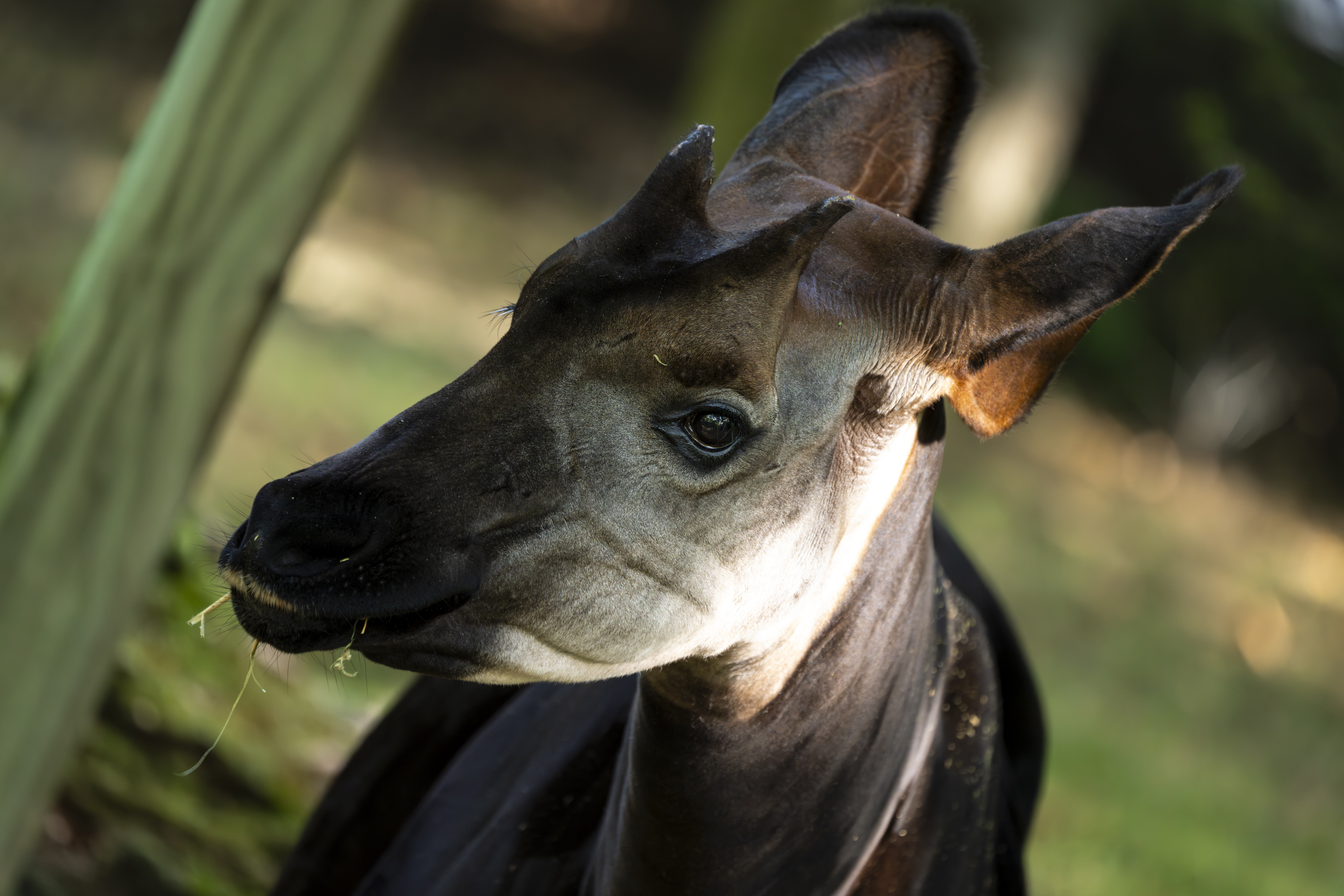
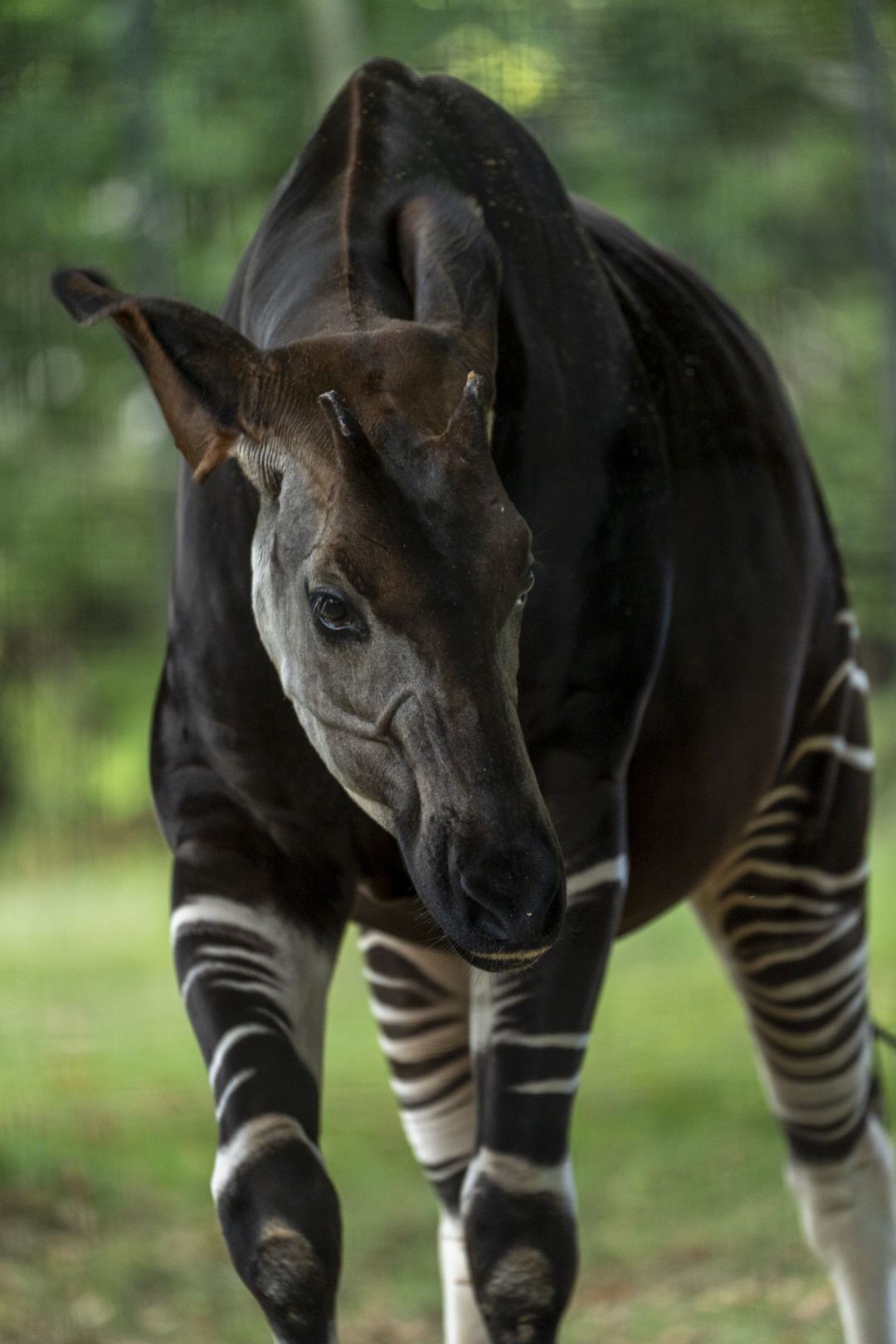
With their rich brown coats, striking black-and-white stripes, large ears, and long tongues, okapi are one of the most distinctive species you can encounter at the Columbus Zoo.
Although their striped legs may bring zebras to mind, okapi are most closely related to giraffes. They are found only in the dense forests of northeastern Democratic Republic of the Congo, where their secretive behavior and forest habitat can make them difficult to observe. Their stripes help provide camouflage among the vegetation, while their muscular, prehensile tongues help them strip leaves from branches as they browse.
Here at the Columbus Zoo, one okapi has become a particularly special member of the Congo Expedition family: El Jewar.
Born in 1995 at the Dallas Zoo, El Jewar arrived at the Columbus Zoo in June 2000 as the third okapi to call the Zoo home. Today, at 31 years old, he holds another distinction: he is the oldest okapi to have ever lived at the Columbus Zoo!
With a median life expectancy of approximately 17 years for okapi, El Jewar’s longevity makes every year with him especially meaningful for his Animal Care team.
Getting to Know El Jewar
Spend enough time around El Jewar, and you may get a close encounter with one of the okapi’s most recognizable adaptations: that tongue! Okapi have long, muscular tongues that can reach around 12-14 inches in length. In their native range, this adaptation helps them browse leaves from a wide variety of plants in the dense forest.
El Jewar has found another use for his. He enjoys interacting with his Animal Care team and has been known to use his tongue to sneak a lick when a team member lingers close to his indoor space. He also enjoys attention from the people who care for him, including neck and ear scratches.
Those relationships between El Jewar and his Care team also play an important role in his health and wellbeing.
Through positive training, El Jewar voluntarily participates in aspects of his own health care. He allows his care team to perform regular hoof care and collect blood, and he can participate in radiographs when necessary. These behaviors give the team important tools to monitor his health throughout his life while encouraging his voluntary participation in the process.
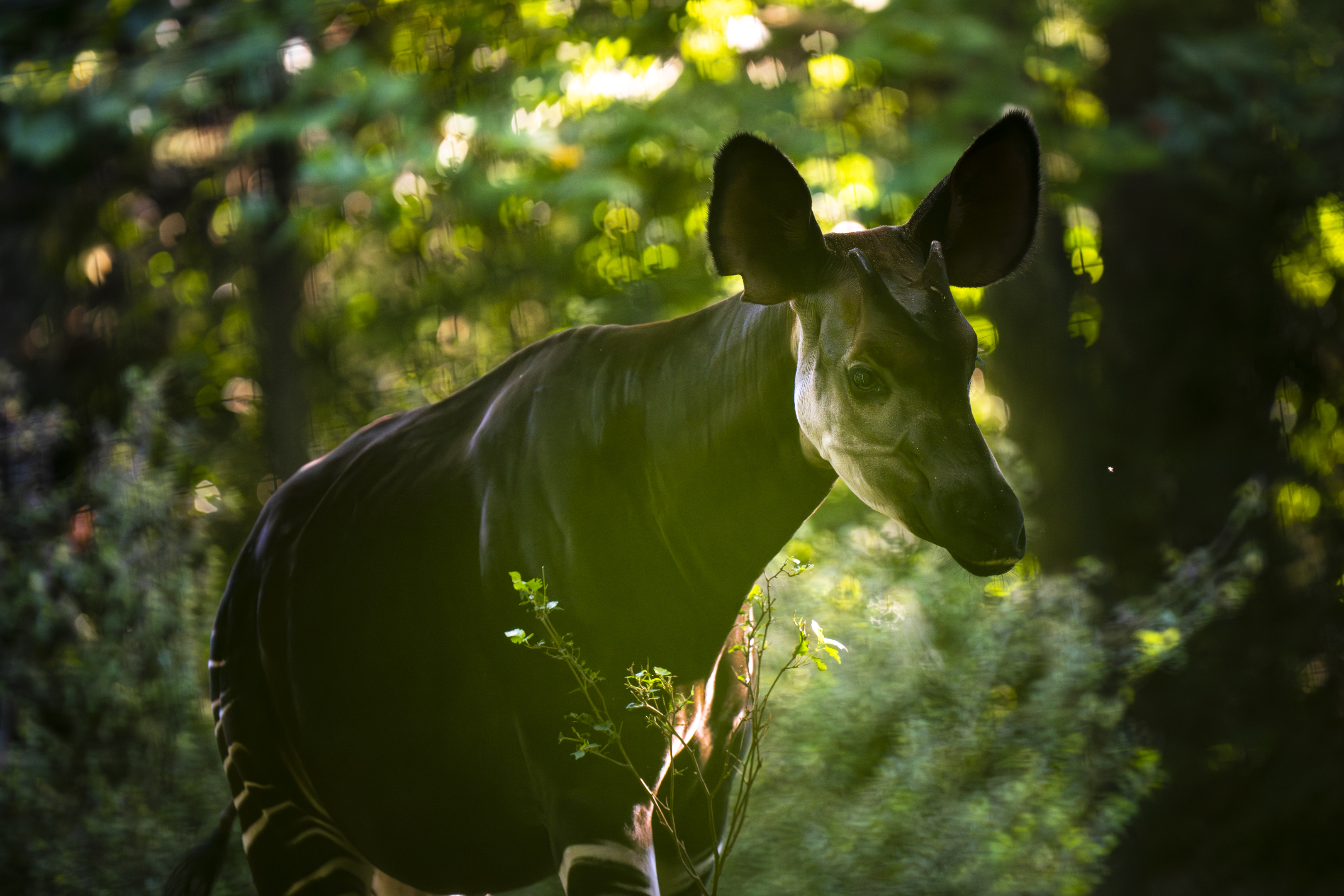
Built for Life in the Forest
El Jewar’s features offer a glimpse into how okapi are adapted for life in the Ituri rainforest.
- Their chestnut-brown coats are oily, helping keep them dry in their humid forest environment. The black-and-white markings across their hindquarters and legs help them blend into their surroundings, and each okapi has a unique pattern that can also help distinguish individuals.
- Their large ears and sensitive hearing help them detect sounds within the dense forest, while their long tongues and flexible lips allow them to grasp vegetation.
- Okapi consume a varied diet that includes leaves, shoots, grass, fungi, seeds, and fruit.
Okapi are also typically solitary. That means seeing El Jewar spending time on his own in his outdoor habitat at the Columbus Zoo is perfectly natural for his species.
Protecting Okapi
In their native range, okapi face serious challenges. The species is classified as endangered, and habitat loss has affected portions of their range in northeastern Democratic Republic of the Congo. Mining, including mining for coltan used in electronics, illegal logging, agriculture, and the collection of wood and charcoal all place pressure on okapi habitat. Human conflict in the region creates additional challenges for wildlife and conservation efforts.
There are everyday actions you can take to help. Recycling old cellphones, laptops, and other electronics can reduce demand for newly mined materials such as coltan. Choosing products that use sustainably sourced palm oil and learning about okapi can also help turn awareness into action.
Celebrating El Jewar
For decades, El Jewar has given guests the opportunity to discover a species found in one small part of the world. For his Animal Care team, he has also built years of relationships through daily care, training, and plenty of surprise licks.
Reaching 31 years old is a remarkable milestone for El Jewar and an opportunity to celebrate the individual animal while learning about the endangered species he represents.
The next time you visit the Congo Expedition region at the Columbus Zoo, look for those unmistakable stripes and large ears in his outdoor yard. And in honor of El Jewar, consider making a conservation-minded change in your own life, from recycling an old electronic device to sharing what you learned about okapi with someone else. It’s a fitting way to celebrate an animal who has been part of the Columbus Zoo story since 2000.