Sarang's arrival from Seoul Zoo reflects years of international collaboration, DHL Express’ transportation expertise, and a shared commitment to protecting one of the world's rarest big cat species.
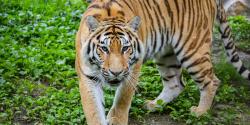
POWELL, OH – The Columbus Zoo and Aquarium has welcomed Sarang, a 4-year-old female Amur (Siberian) tiger from Seoul Zoo in South Korea, as part of an international conservation effort to help strengthen the future of one of the world's most endangered big cat species.
Sarang arrived at the Columbus Zoo on July 16, 2026 following more than two years of planning and collaboration between the Columbus Zoo and Seoul Zoo through the World Association of Zoos and Aquariums' (WAZA) Global Species Management Plan (GSMP) for Amur tigers. Recommended through the GSMP in 2023, her transfer required extensive international coordination, veterinary and logistical planning, permitting, and specialized transportation before her safe arrival in Ohio.
Both the Columbus Zoo and Seoul Zoo participate in WAZA's GSMP, which helps maintain genetically healthy populations of Amur tigers in professional care. Sarang's transfer also supports the Association of Zoos and Aquariums' (AZA) Amur Tiger Species Survival Plan® (SSP), reflecting the shared commitment of accredited zoos worldwide to conserve endangered wildlife through science-based population management.
"We're grateful to our partners at the Seoul Zoo for entrusting Sarang to our care and to WAZA and AZA for the years of collaboration that made her arrival possible," said Tom Schmid, President and CEO of the Columbus Zoo. "Assuring that we will have tigers in accredited zoos so that we can help save these endangered species from extinction is a shared commitment that extends beyond any one institution or country, and we're proud to be part of a global community working together to advance the long-term conservation of Amur tigers."
"We are very proud that Seoul Zoo is able to make a meaningful contribution to the conservation of internationally endangered species," said Park Jin-soon, Director of Seoul Zoo. "We hope Sarang's transfer to the United States will serve as an important milestone in securing a successful future for the Amur tiger."
The international relocation also required close coordination among zoological institutions, veterinarians, wildlife authorities, and logistics experts to ensure Sarang's journey was completed safely and with the highest standards of animal wellbeing.
Working alongside the Columbus Zoo and Seoul Zoo teams, DHL Express coordinated the time-sensitive transport of Sarang from South Korea to Ohio, helping ensure her journey was completed safely and efficiently while minimizing travel time and prioritizing her wellbeing throughout the process. The Columbus Zoo thanks Seoul Zoo for its partnership throughout the planning process and extends its appreciation to DHL Express for coordinating Sarang's international relocation.
"DHL Express is honored to support global conservation efforts by helping transport endangered species safely around the world," said Laurice Bancroft, Sr. VP of Operations for DHL Express Americas. "Moving an animal like Sarang requires much more than transportation – it requires careful planning, close collaboration, and the expertise of our international network. We're proud to help connect organizations working together to protect vulnerable wildlife and contribute to conservation efforts that will benefit future generations."
Sarang joins Lewis and Clark, two Amur tiger brothers who arrived at the Columbus Zoo earlier this year through the AZA SSP. Now just over two years old, the brothers continue to thrive under the care of the Zoo's Animal Care team. Together, their arrivals reflect carefully coordinated breeding recommendations designed to support the long-term survival of the species.
Upon arrival, Sarang began a routine quarantine and acclimation period under the care of the Zoo's Animal Care and Conservation Medicine teams. Team members accompanied her throughout her journey from South Korea to Ohio to help ensure her wellbeing during the international transfer. As with all new animal arrivals, she will be given the time needed to adjust before transitioning to her habitat. Information about when guests may have an opportunity to see Sarang will be shared at a later date.
Amur tigers are the largest of all tiger subspecies and the only living tiger subspecies adapted to survive in cold, snowy climates. Native to the Russian Far East and parts of northeastern China, they face ongoing threats from habitat loss, poaching, and human-wildlife conflict. Listed under Appendix I of the Convention on International Trade in Endangered Species of Wild Fauna and Flora (CITES), they receive the highest level of international protection for species threatened with extinction. Today, only an estimated 500 Amur tigers remain in the wild, making global conservation efforts more important than ever.
Through partnerships among WAZA, AZA, accredited zoological institutions, and organizations like DHL Express, conservation professionals bring together expertise in animal care, science, and international logistics to help protect endangered species for future generations.
For updates about the Columbus Zoo’s conservation initiatives, educational programs, events, and more, follow the Zoo’s social media accounts on Facebook, Instagram, TikTok, and LinkedIn, and visit us at ColumbusZoo.org.