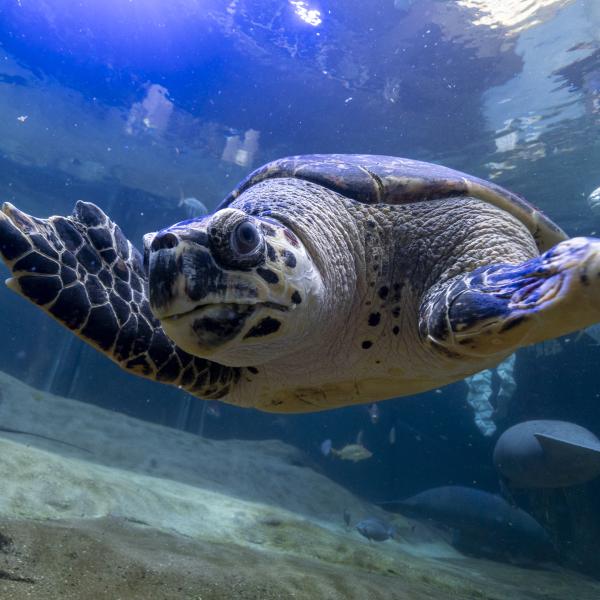
Hawksbill turtles have a long, oval-shaped shell called a carapace, with layers of scutes (or scales) on top. The sides and back of their shell have jagged edges. The shell is mostly brown with yellow, orange, or reddish-brown spots. The underside, called the plastron, is yellowish with black spots. Young hawksbill turtles have dark brown or black shells, with lighter brown or yellow along the edges and on their limbs.
They have a narrow head and beak-like jaws that help them reach into coral reefs to find food like sponges. Their long, paddle-shaped flippers help them swim; the front flippers push them through the water while the back flippers help them steer. Sometimes, the front flippers have one or two claws to help them hold onto coral, rocks, or mates.
Like other sea turtles, hawksbills have a special salt gland that helps them get rid of extra salt from their bodies. This gland makes it look like they are “crying” on land, as the salt and fluid keep their eyes clean while females dig nests.
Sea turtles often spend most of their time underwater, diving to escape predators and save energy. Being cold-blooded, they have a slow metabolism, allowing them to stay submerged for longer. During deep dives, their blood goes to the most essential organs, like the heart and brain, while less important areas get less blood. This process allows them to dive deeper for longer. Hawksbill turtles can hold their breath for about 35 to 45 minutes.