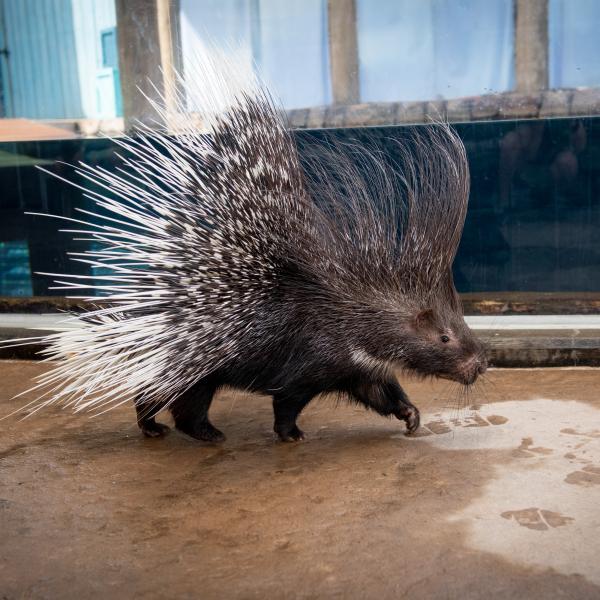
Porcupines cannot shoot their quills, but they are far from defenseless! 

When threatened, they raise and rattle their quills as a warning.  If touched, the sharp quills detach and stick in a predator’s skin— giving the porcupine a chance to escape.

Located in the Australia & the Islands region


Scientific Name: Hystrix indica

Conservation Status: Least Concern

Size: Around 2.5 to 3 ft. long

Weight: 25 to 40 lbs.

Median Life Expectancy: Males: 14.5 years; Females:12.1 years

Indian Crested Porcupine, Curry
Nutrition

Indian crested porcupines are herbivores, meaning they eat plants. This includes roots, fruits, and grains.

At the Zoo, porcupines receive a variety of produce.

Current Range and Historic Range

This species is found throughout southeast and central Asia, including parts of the Middle East.

Habitat

Indian crested porcupines can live in many different habitats, including tropical and temperate scrublands, grasslands, and forests.

Predators and Threats
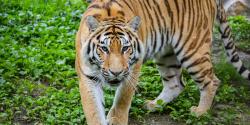
Big cats such as tigers and leopards are the main predators of this species.
 
Indian crested porcupines generally do not face major threats across their range. However, they are sometimes hunted by humans for their meat and quills. Farmers may see them as pests because they eat crops, so they might trap or kill them. Also, when people build homes or farms, these animals can lose their habitat.