Today, The Wilds is known for its groundbreaking conservation work with endangered species like giraffes, rhinos, and cheetahs, as well as unforgettable guest tours and immersive wildlife experiences. But just a few decades ago, the land beneath this remarkable landscape told a very different story.
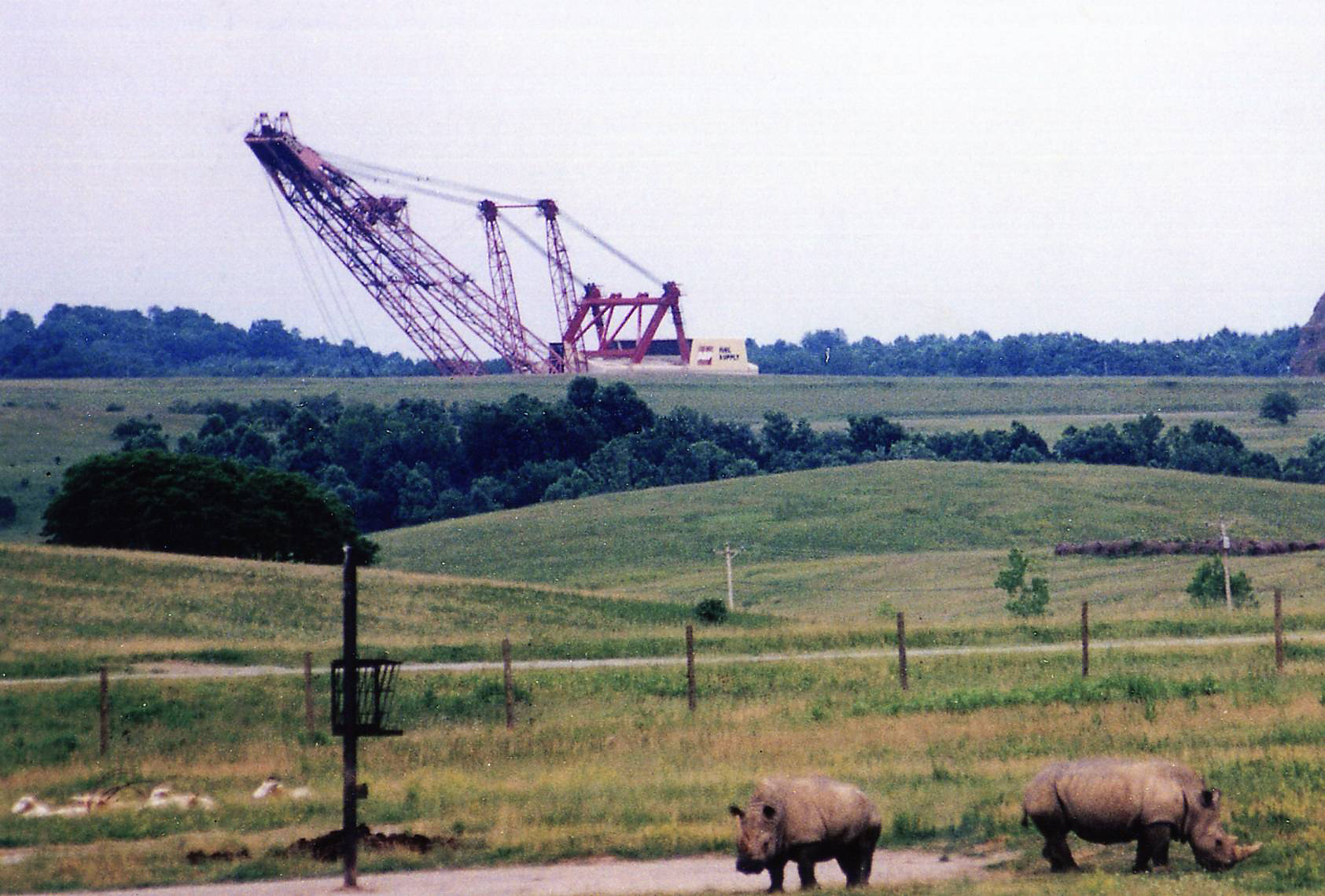
From the 1940s through the 1980s, much of the land that now makes up The Wilds was surface-mined for coal. To make extraction more efficient, Central Ohio Coal, a subsidiary of American Electric Power, built the world’s largest walking dragline: Big Muskie. During its 23 years of operation in southeastern Ohio, Big Muskie moved more earth than was displaced during the construction of the Panama Canal construction.
Even during that era, restoration had already begun. Central Ohio Coal led some of the earliest recovery efforts by planting trees and creating ponds and waterways designed to support wildlife.
A Landscape Reimagined
In 1977, Congress passed the Surface Mining Control and Reclamation Act of 1977, transforming land restoration practices across the country. Reclamation efforts shifted to focus on contouring the land and establishing cool-season grasses rather than relying solely on forest restoration.
That legacy is still visible today in the expansive pastures and rolling hills that define The Wilds’ breathtaking landscape.
While roughly 3,000 acres are dedicated to endangered animal species and thrilling guest experiences, the remaining nearly 7,000 acres serve as a living laboratory. Here, The Wilds’ Ecology Department continues the long arc of restoration, transforming formerly mined land into thriving habitat for native wildlife.
- Across the Healthy Forest area, the restoration branch of the Ecology Department removes invasive species such as Tree of Heaven and Amur honeysuckle while planting native understory species like silky dogwood to improve habitat for native wildlife.
- The 50-acre Miller Valley Wetland and Stream has welcomed the return of many native species, including marsh birds like the Virginia rail, a variety of amphibians, and even North American river otters!
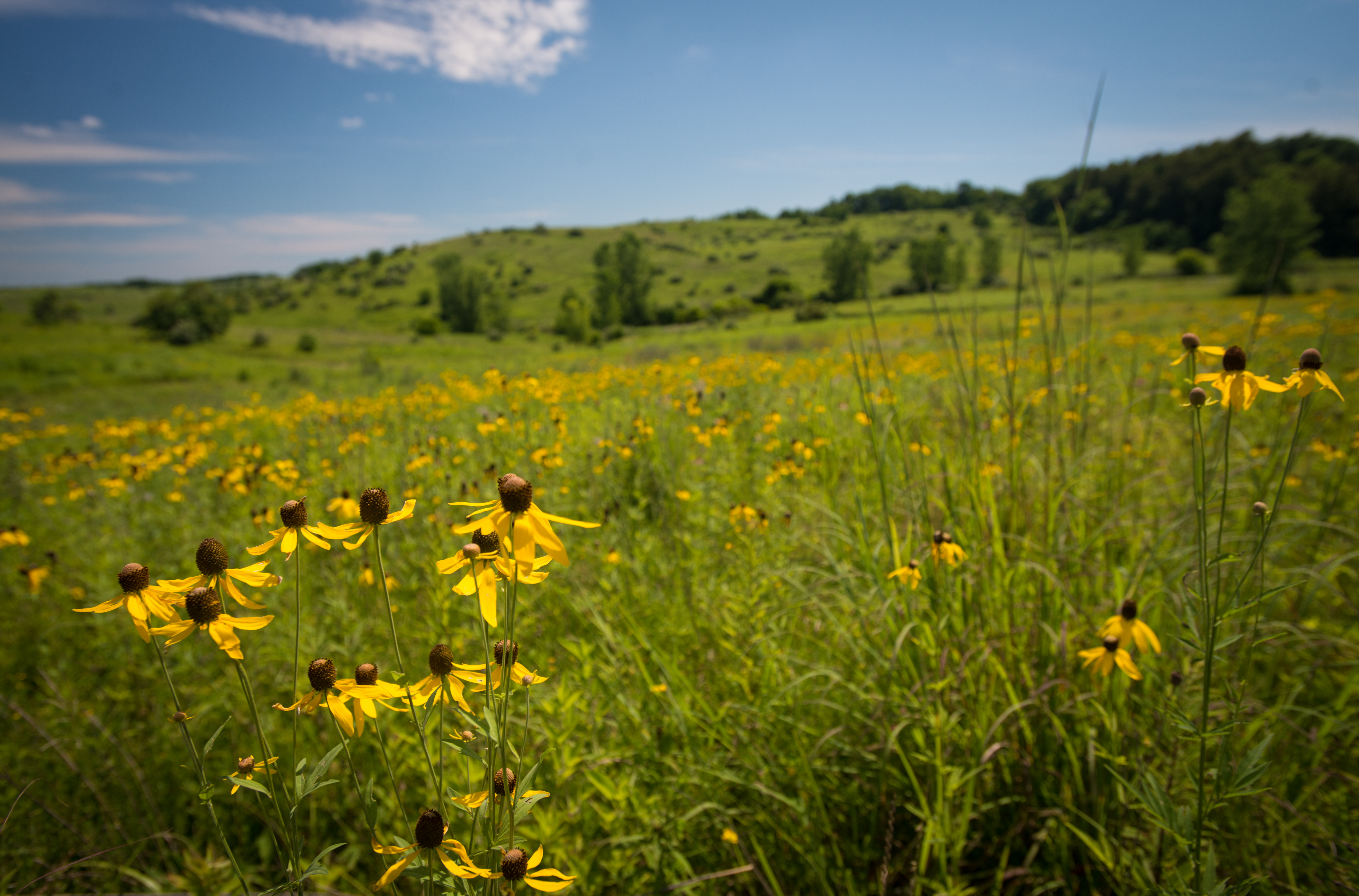
- More than 700 acres of prairie have also been restored, replacing non-native cool-season grasses with native habitat that now supports grassland birds and a rich diversity of pollinating insects.
Science That Tracks Recovery
The Wilds’ wildlife ecology work focuses on the animals benefiting from this restoration, both on-site and in ecosystems far beyond Ohio.
From monitoring mammals with trail cameras to checking eggs in bird boxes and using cover tins to document reptiles and amphibians, the wildlife ecology team uses multiple survey methods to better understand animal presence and population changes as habitats recover.
Using advanced genetics, the wildlife conservation team has also studied the population health of species including bobcats, freshwater mussels, Rota white-eyes, and several salamander species.
Recovering Threatened Species
The Wildlife Ecology team also plays a critical role in recovering two threatened species: the American burying beetle and the eastern hellbender.
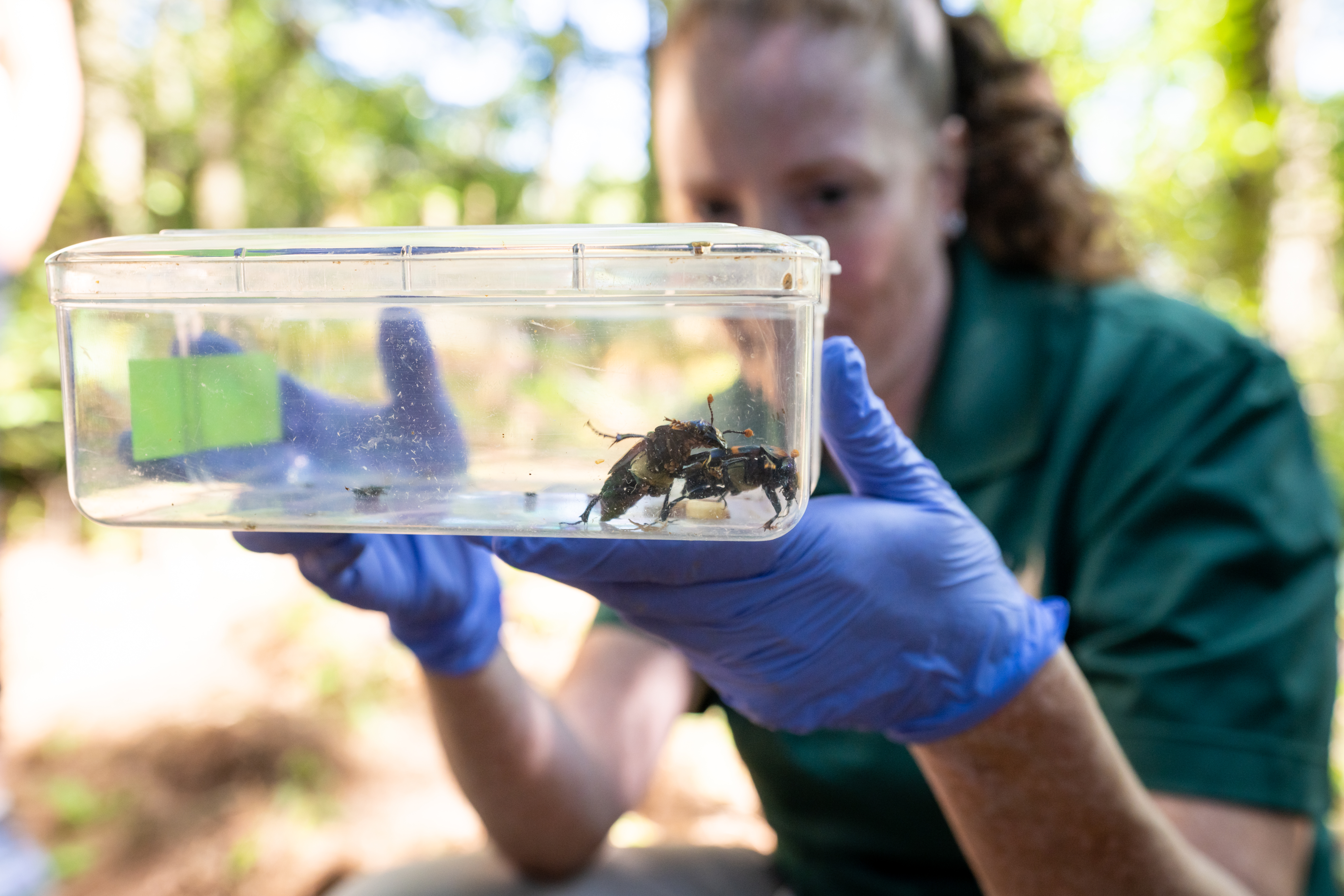
Once found throughout the eastern United States, the American burying beetle has been extirpated from Ohio. In partnership with several conservation organizations, more than 4,000 beetles have been released at The Wilds. Ongoing recapture studies help determine whether a self-sustaining population is taking hold for this essential nutrient recycler.
The eastern hellbender head-start program is conducted primarily in collaboration with the West Virginia Department of Natural Resources. Eggs are collected from streams and brought back to The Wilds, where young hellbenders can grow safely for several years before being released into rivers and streams in West Virginia.
To date, more than 200 of North America’s largest salamanders have returned to their natural environment.
Experience Rewilding in Action
Now, guests have the opportunity to witness this extraordinary work firsthand!
The new Restoring Nature at The Wilds tour invites guests behind the scenes to explore the research and conservation work the Ecology team performs every day.
The experience begins at the newly-renovated Hellbender Conservation Center, where guests can meet some of its famously slimy residents and learn about the head-start program. From there, guests travel to the American Burying Beetle Breeding Center to encounter one of the world’s most endangered insects and discover the work being done to restore its future.
The tour concludes with a guided walk through one of The Wilds’ restored prairies, where guests learn about the organization’s habitat restoration efforts and one of North America’s most imperiled ecosystems. Along the way, they may even spot monarch butterflies drifting through the grasses like little pieces of living sunlight.
The program is offered May through October, Thursday through Saturday.

The story of The Wilds is, at its heart, a story of renewal.
What was once a landscape shaped by industry has become a place where native prairies sway, wetlands pulse with life, and threatened species are given a second chance. None of this happens by accident. It is made possible every day by the dedication, expertise, and vision of The Wilds’ Ecology team, whose work continues to heal the land, protect wildlife, and deepen our understanding of the natural world. Their efforts remind us that conservation is not only about saving species, but about restoring hope, rebuilding ecosystems, and proving what is possible when people commit to a wilder future.