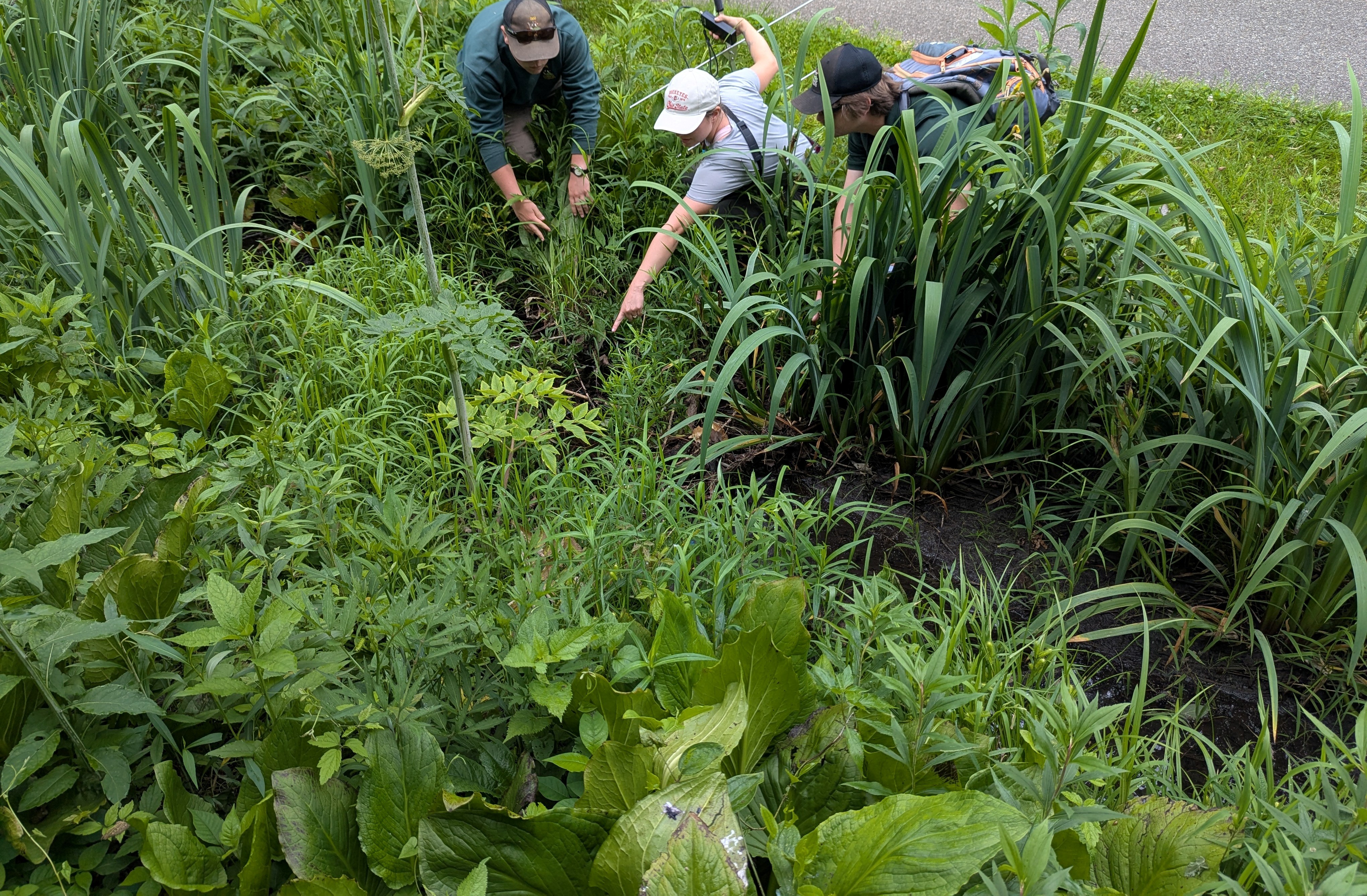
Hidden among shallow wetlands, marshes, and wet meadows is a reptile many people never realize exists. The spotted turtle spends much of its life moving through dense vegetation and shallow water, often going unnoticed. Wetlands provide essential habitat for countless species of plants and animals, including this small turtle that depends on these ecosystems for food, shelter, and breeding sites.
Spotted turtles are among Ohio’s most distinctive native reptiles. Measuring just 3.5 to 5 inches in length, these turtles are small enough to fit in the palm of a hand, and each individual has a unique set of yellow spots across its shell. These markings are often compared to a fingerprint because no two shells are exactly alike. They can live for several decades in the wild and are, perhaps, most notable for their early season activity. Spotted turtles have been observed moving about before the ice has fully melted from their wetland homes and usually become inactive - burying themselves on land or underwater – shortly after their mid-June nesting season.
In Ohio, spotted turtles are of particular conservation concern. They are listed as a Threatened species by the Ohio Division of Wildlife and were recently reviewed by the US Fish and Wildlife Service for protection under the Endangered Species Act. Wetland loss, habitat fragmentation, invasive plants, increased predation, poaching, and other human-related pressures have contributed to declines in their population throughout much of their range. In the southwestern part of the state, they are currently only known at four sites, one of which was discovered during CZA-supported surveys in 2025. Because populations are so limited and scattered, long-term monitoring plays an important role in determining the status and threats to populations and understanding how these turtles use the landscape.
Earlier this year, with continuing support of the Columbus Zoo, and in collaboration with OSU researchers, 10 spotted turtles at the newly-discovered site were fitted with radio transmitters. These transmitters allow researchers to follow their movements over time and to better understand how spotted turtles use the landscape throughout the year. This includes identifying movement patterns and critical habitat features that support healthy populations, such as nesting and overwintering areas. Similar monitoring work is also underway at other sites in Ohio and Michigan, including two in northeast Ohio that were discovered during surveys in 2023.
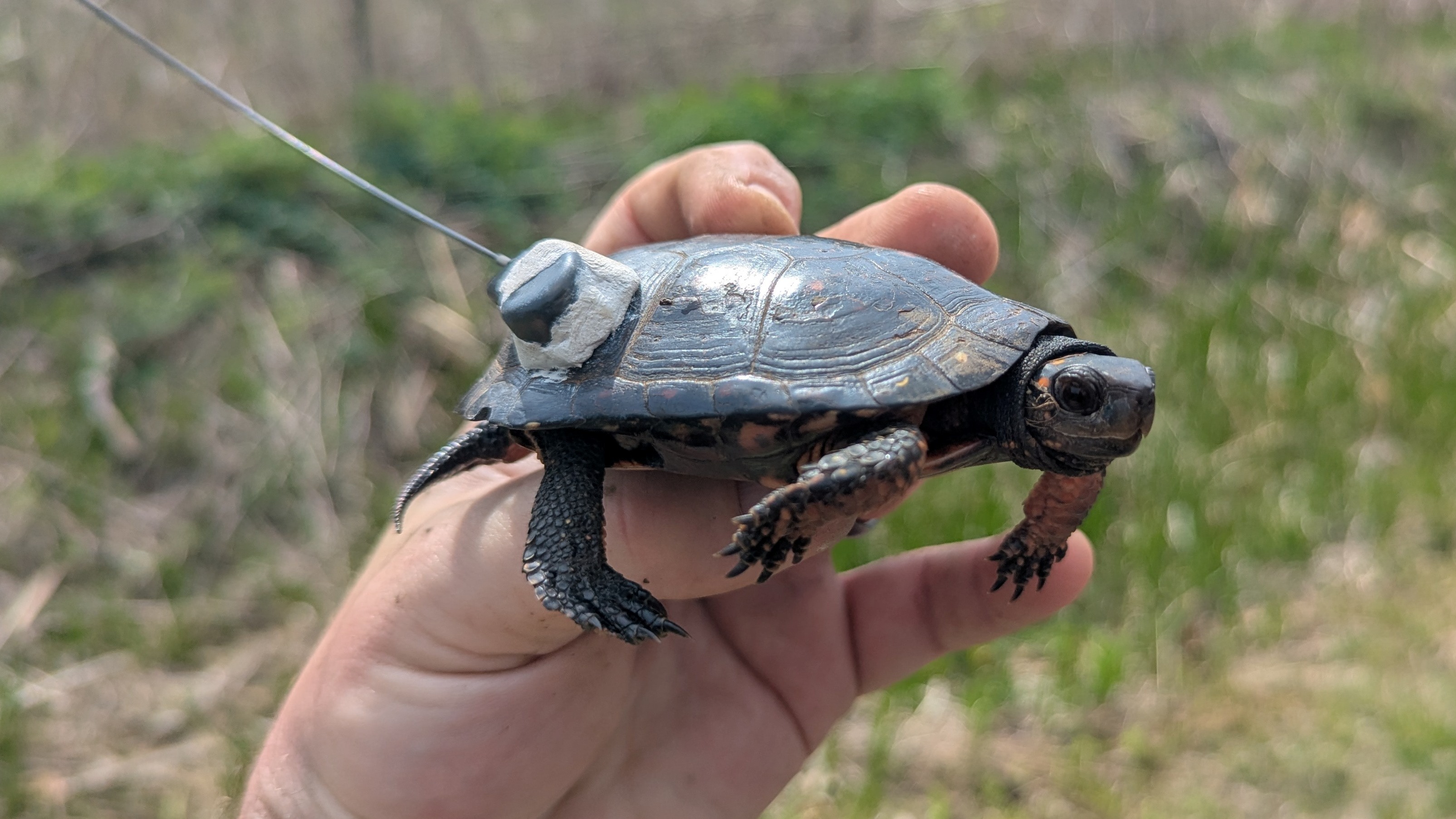
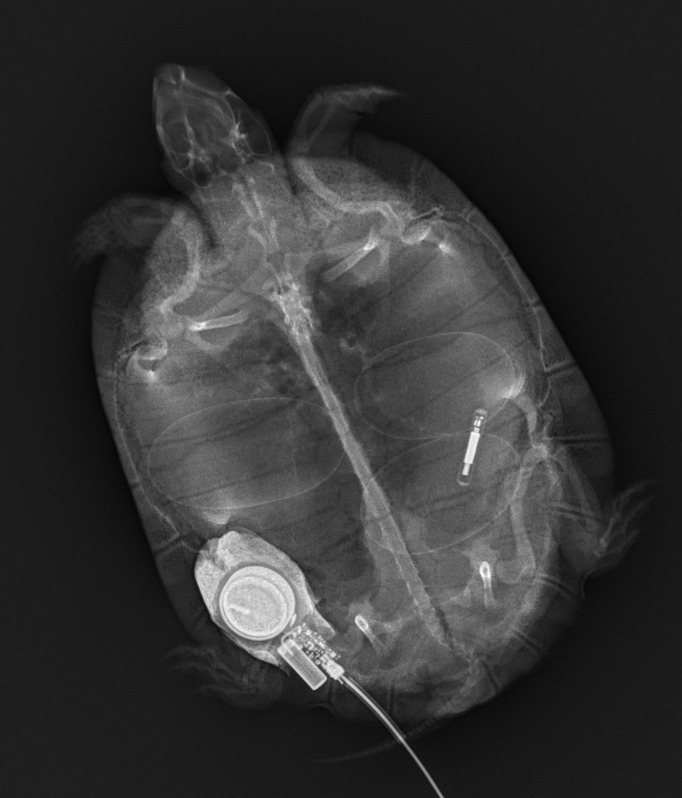
During recent fieldwork, veterinary staff from CZA also joined the field team at one of the sites to assist with health assessments, including radiographs of captured turtles. The x-rays revealed 2-3 eggs in 3 of the 5 adult females. In addition to helping researchers know which turtles will be nesting soon, this information will inform Population Viability Analysis (PVA) models, where data on clutch size, reproductive frequency, minimum size of reproductive females, and demographics of the population are used to understand what conservation actions are needed and will be most effective.
Together, these efforts are helping build a clearer picture of a species that often goes unseen. With so few known populations in Ohio, each spotted turtle represents a unique piece of a much larger conservation story. Continued research, habitat protection, and restoration of wetlands are all essential to ensuring this small but remarkable reptile remains part of Ohio’s natural heritage.