Become a Zoo Member!
Unlimited visits all year long, free parking, and more.


Today's Hours: 10am - 5pm
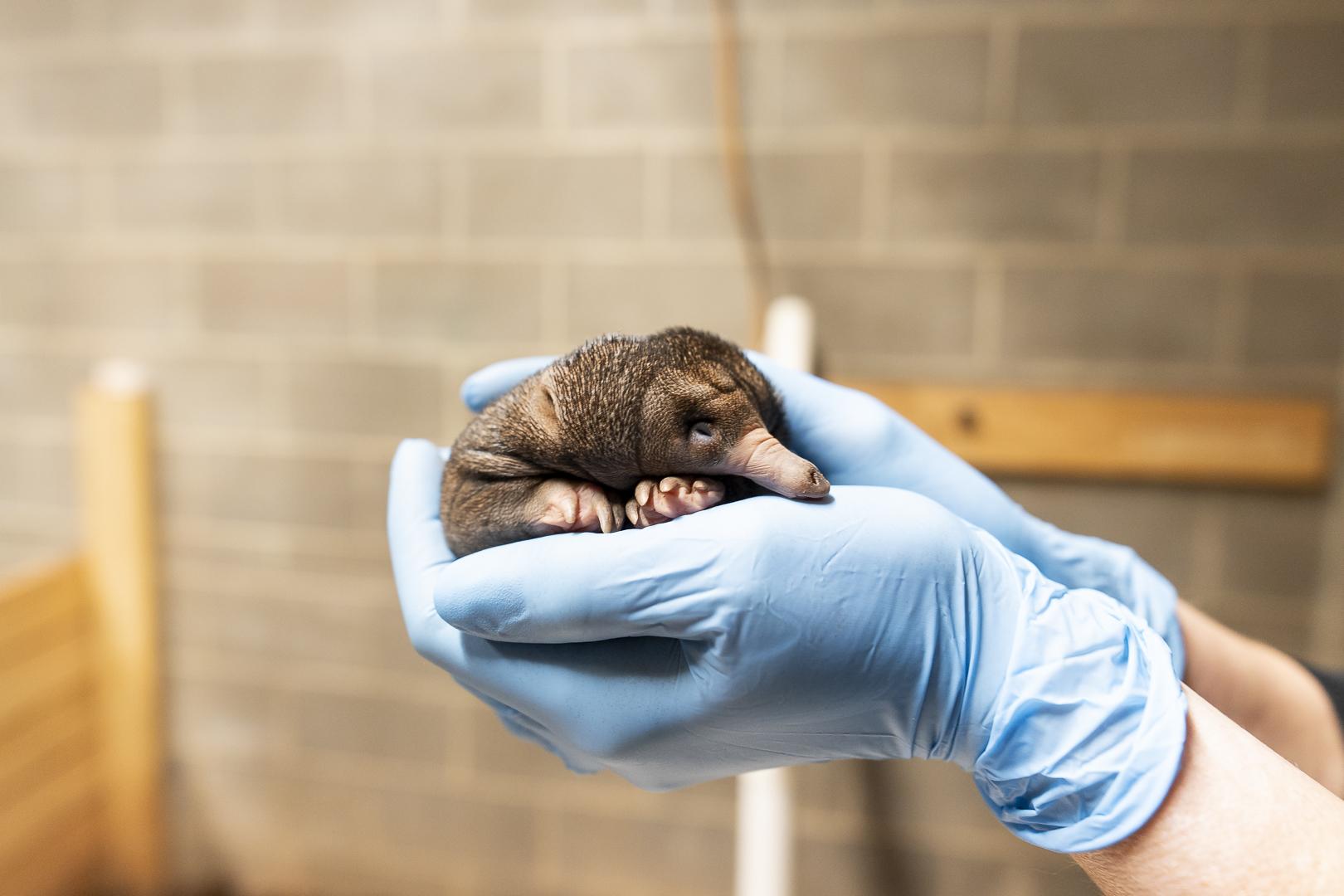
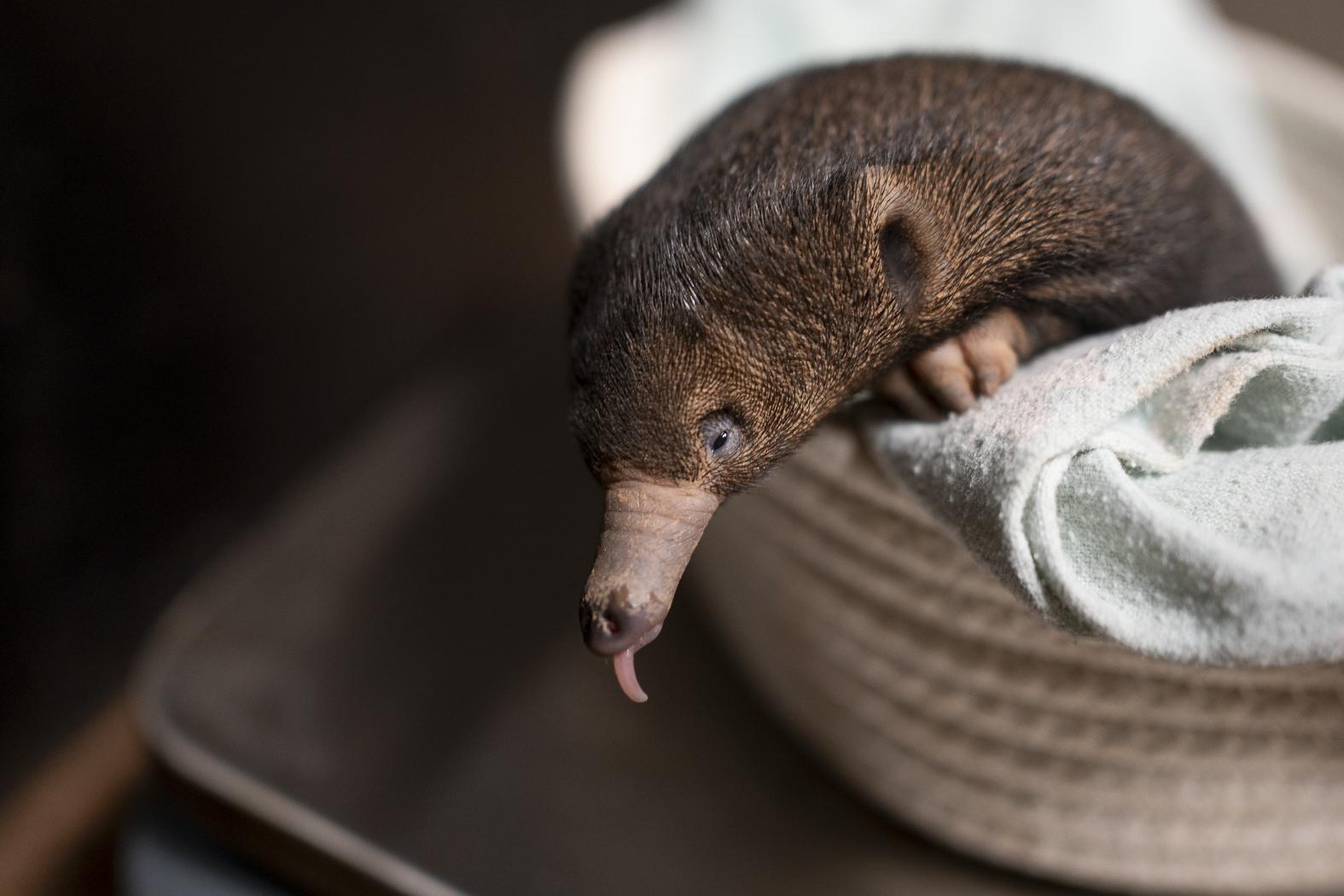
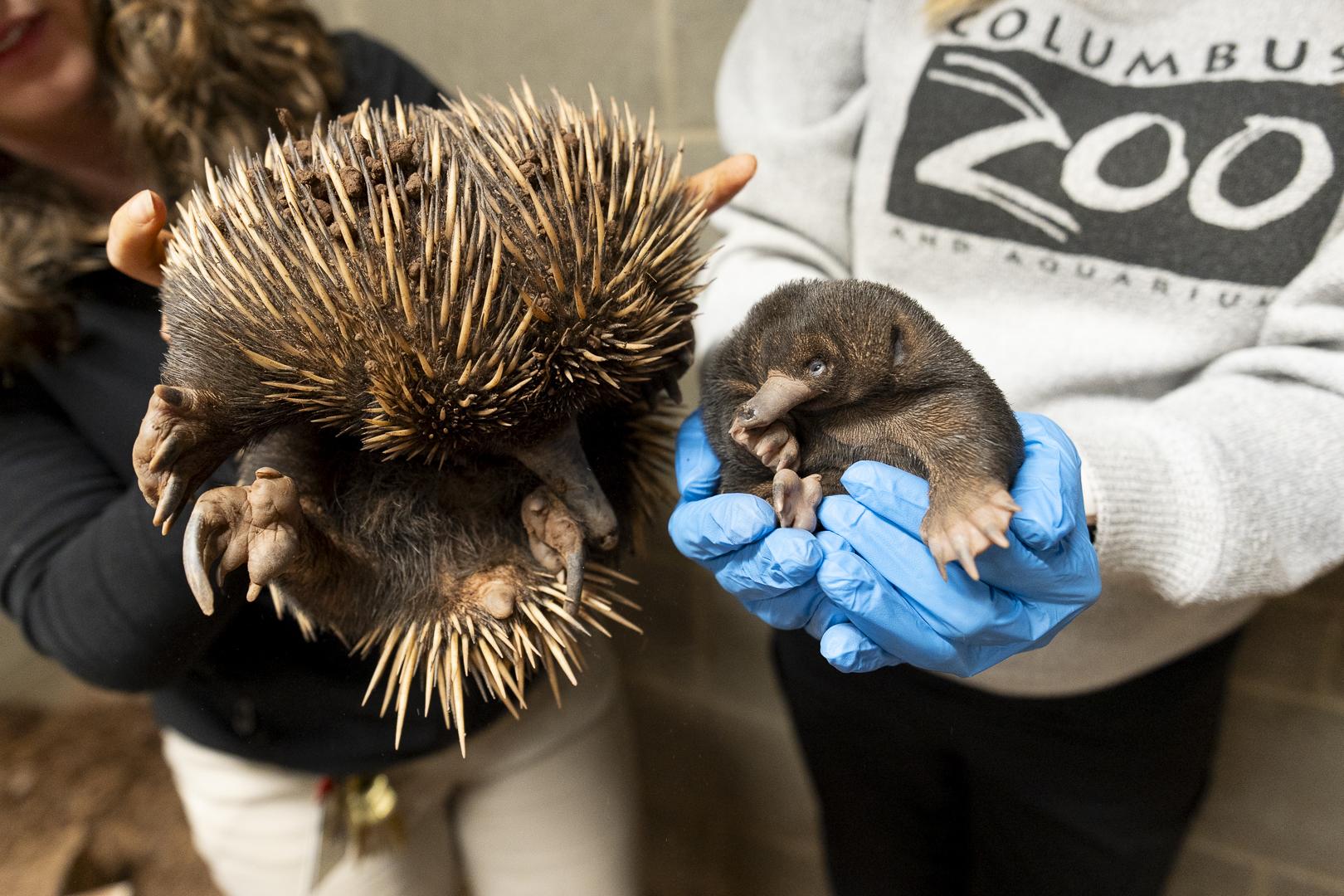
Tiny clawed feet. An elongated snout. The first hints of spines along its back.
Still guessing what it could be?
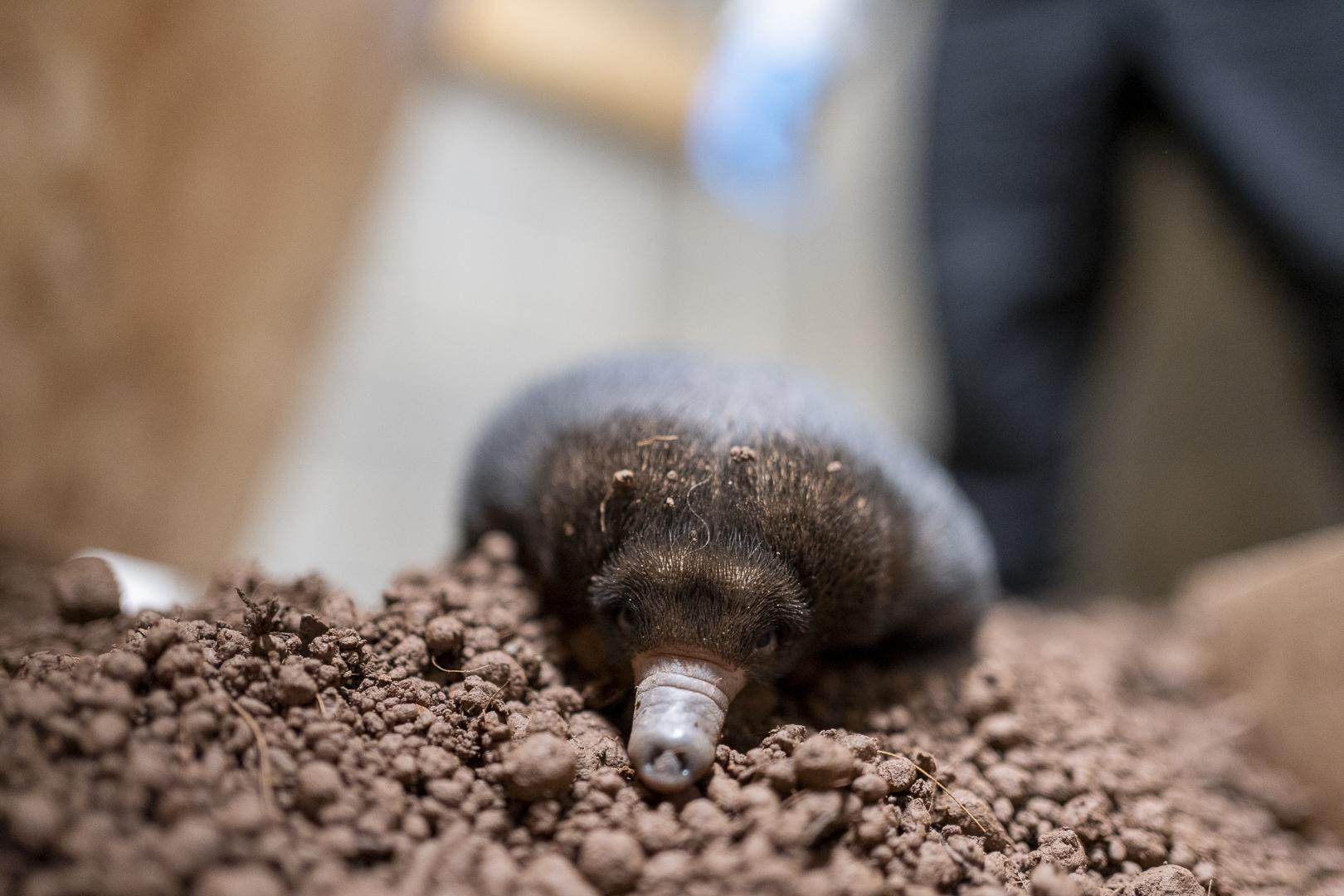
It’s a puggle—the delightfully fitting name for a baby echidna.
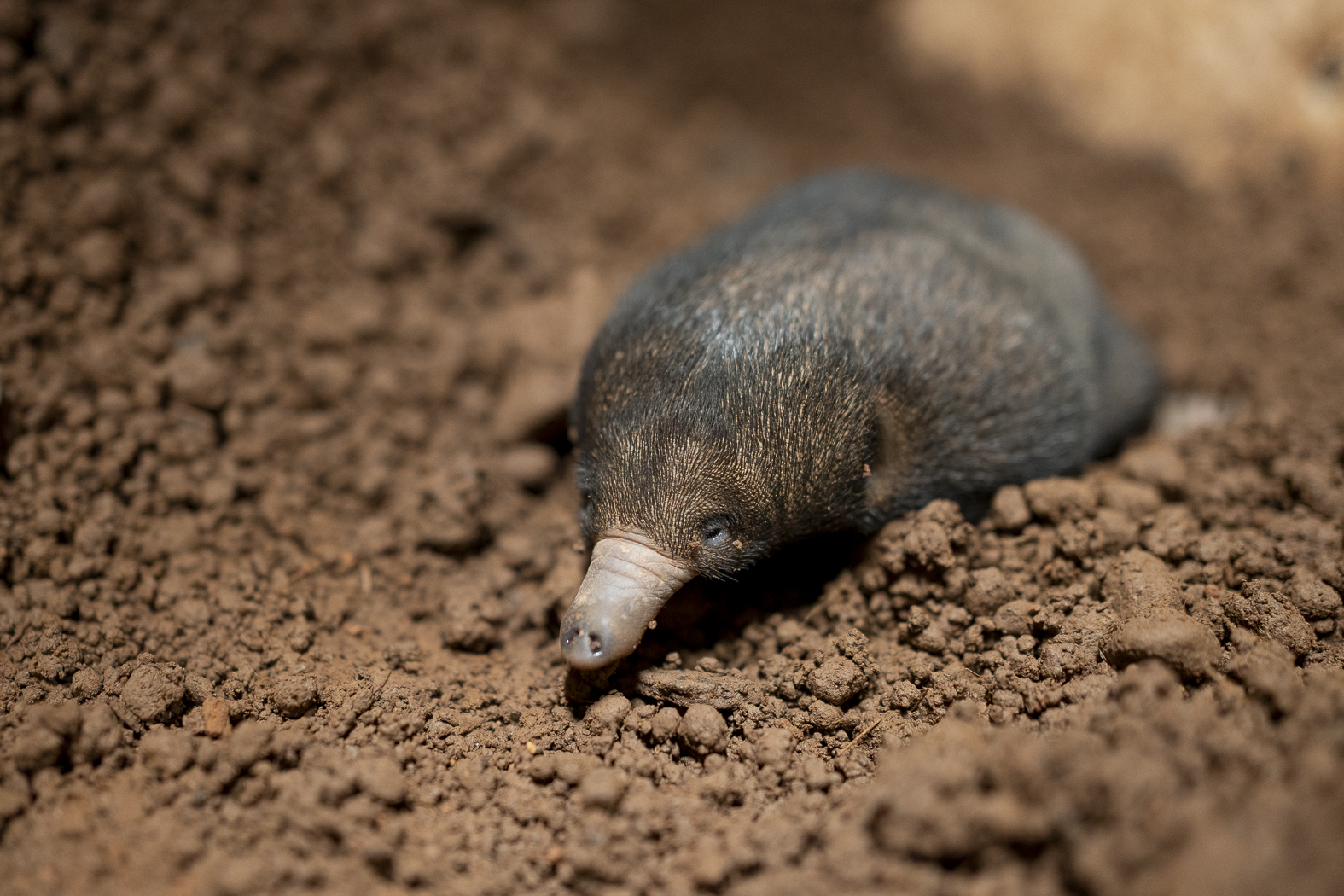
Puggles are exceedingly rare in the United States, which makes this milestone especially exciting: the first successful development of a short-beaked echidna puggle in the Columbus Zoo and Aquarium’s history.
Since hatching, the puggle has already progressed through several critical early milestones, a promising sign in the early stages of development.
For the Zoo’s Wild Encounters team, that progression reflects months of dedicated care, close observation, and collaboration with partners across the world.
Echidnas are monotremes, a rare group of egg-laying mammals that includes four species of echidna and one species of platypus. While echidnas do not closely resemble their duck-billed relative, they share the same ancient evolutionary lineage.
Once the puggle hatches, the mother carries her young in a pouch for approximately 50–70 days before depositing the puggle in a burrow, returning occasionally to nurse. Echidnas have specialized mammary patches to nurse their young.
The Columbus Zoo is home to short-beaked echidnas, a species native to Australia, Tasmania, and parts of Papua New Guinea. They use their powerful digging claws and a long, sticky tongue to forage for ants and termites. When threatened, an echidna can anchor itself into the ground with remarkable strength, leaving its spines exposed to deter predators.
“They’re like little armored tanks,” said Amber Kyle, Senior Specialist for the Columbus Zoo’s Wild Encounters Outreach team. “They might remind you of a porcupine or hedgehog, but they are a different creature entirely.”
Only a small number of Association of Zoos and Aquariums (AZA)-accredited facilities in the United States care for echidnas, and even fewer have successfully bred them.
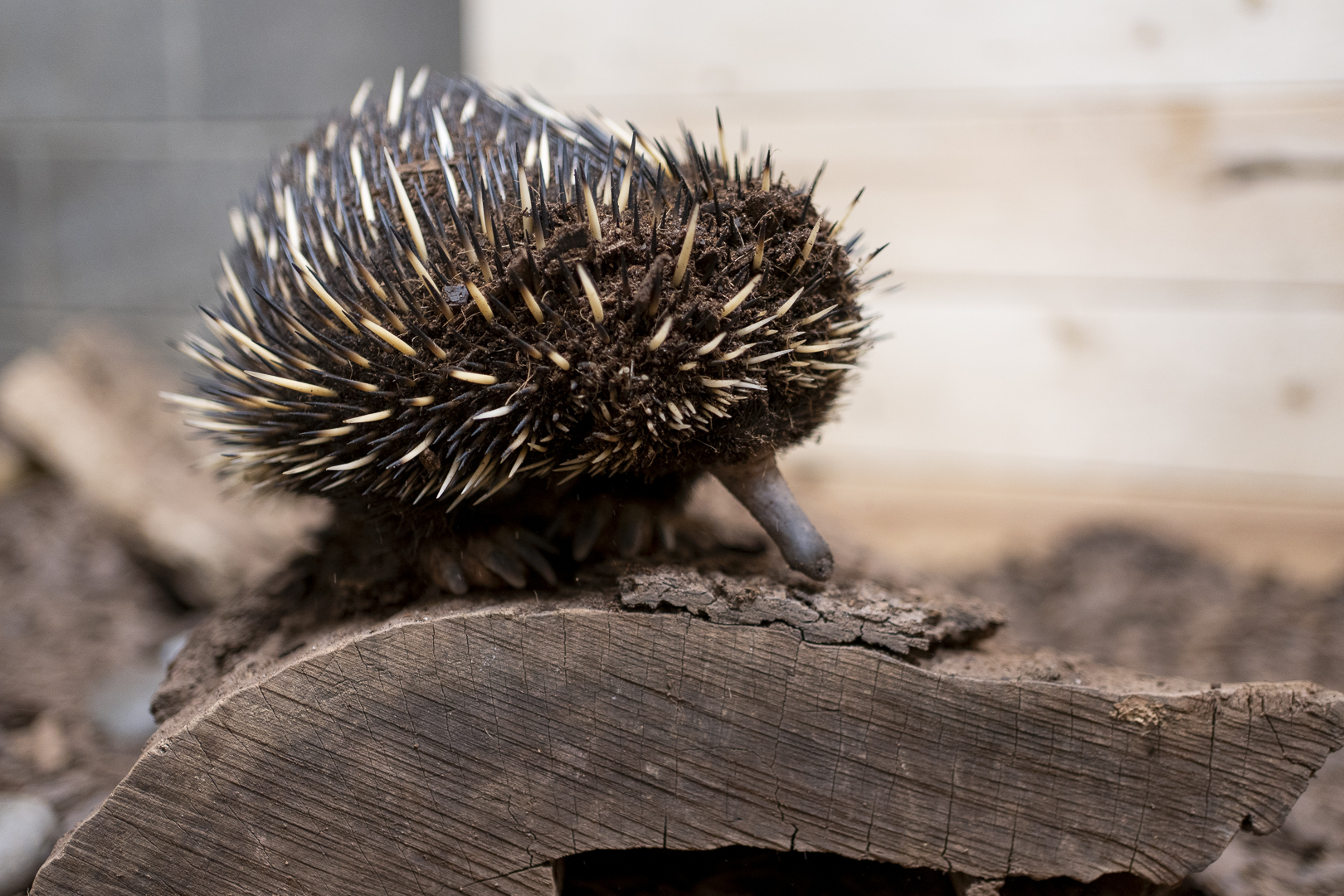
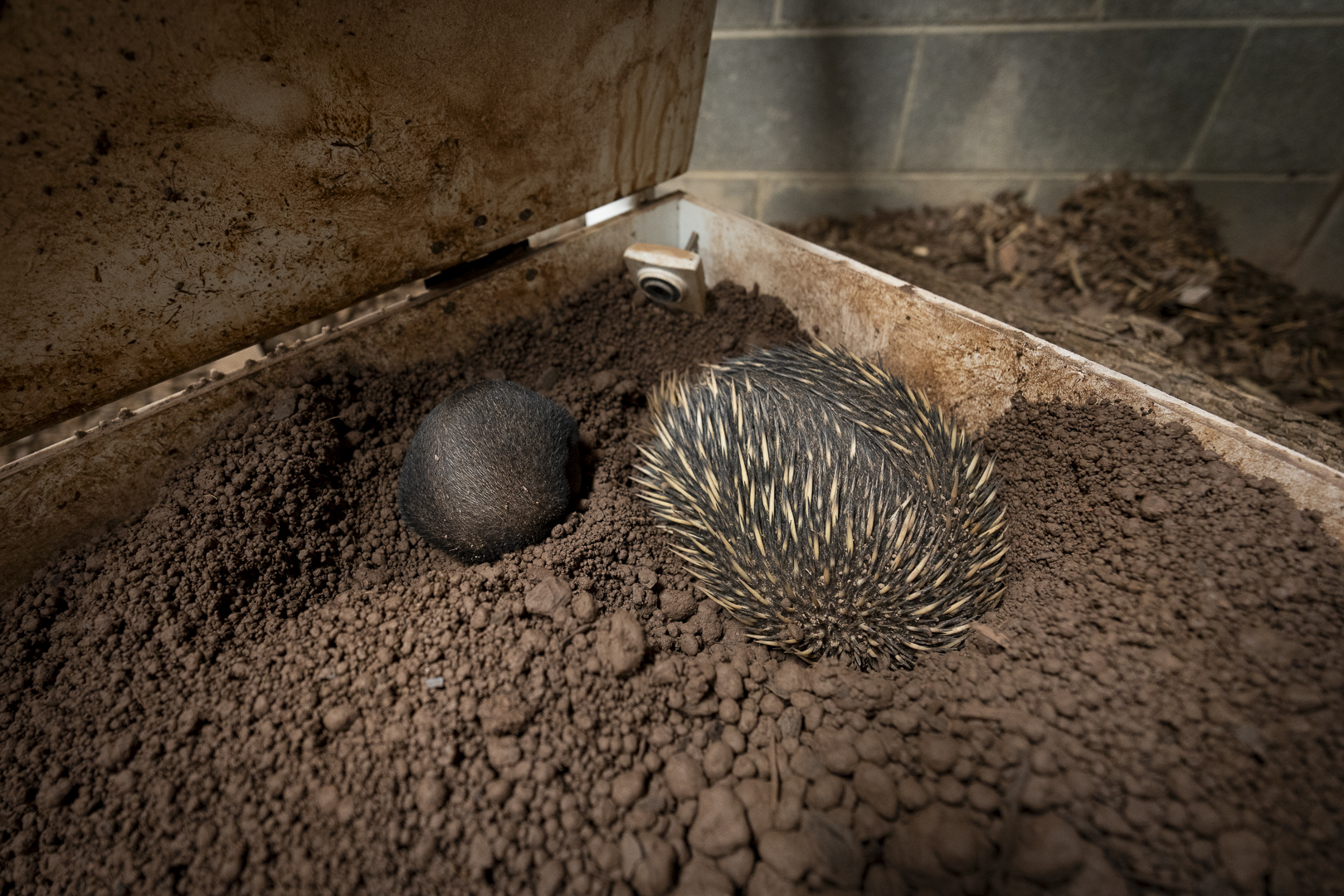
Edna and Elonzo have been part of the Columbus Zoo’s Wild Encounters program for years, helping guests connect with wildlife through community outreach. Both are around 14 years old and have spent much of their lives as ambassador animals.
Sex identification in echidnas can be challenging because their reproductive anatomy is internal and difficult to distinguish, even with imaging.
“Everything is internal, and even with CT imaging, it can be difficult to tell,” explained Emily Yunker, Wild Encounters Assistant Curator. “It’s not unusual in this species to later confirm sex through genetic testing.”
As part of ongoing husbandry collaboration and expert review, genetic testing confirmed that the Zoo was caring for a breeding pair: one female and one male, both genetically valuable within the small U.S. echidna population.
“That was the moment everything shifted,” Emily said. “We realized we had a unique opportunity to establish a new breeding program at our Zoo, which doesn’t come along very often.”
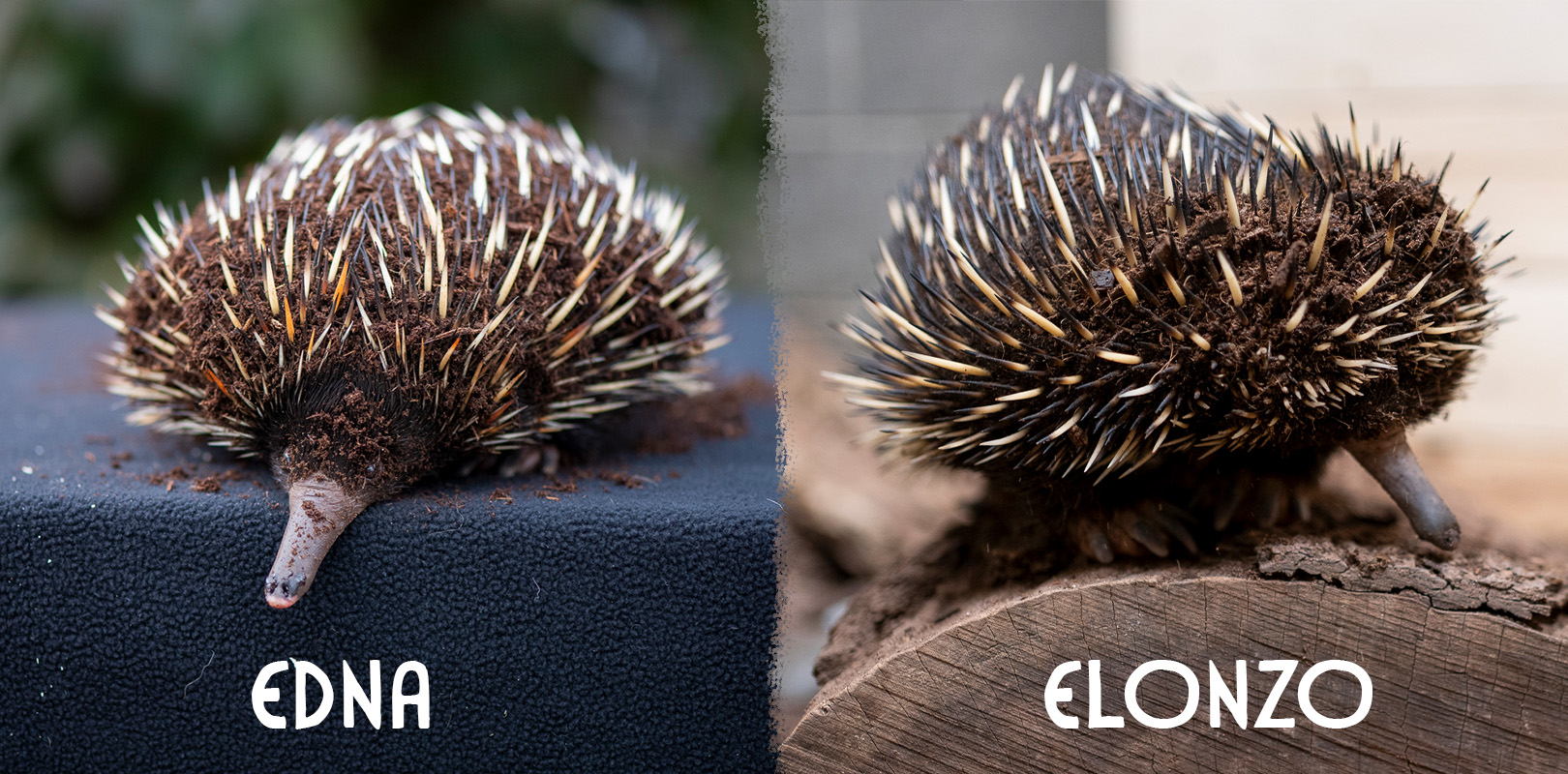
The first successful breeding between Edna and Elonzo resulted in a puggle in December 2023, marking the first echidna birth in the Columbus Zoo’s history.
Unfortunately, the young did not survive long enough to be deposited, the stage when a mother places her growing puggle into a nesting burrow and returns periodically to allow the puggle to feed on milk. Although echidnas lay eggs, they are still mammals and nurse their young after hatching. While this loss was difficult, it has been documented that first-time mothers frequently lose their offspring, though the biological mechanisms are not fully understood.
Rather than stepping back, the team leaned further into collaboration.
“We looked at everything,” Amber said. “Diet, habitat setup, timing, environmental conditions. Anything we could evaluate or refine, we did.”
Environmental variables were reassessed, nesting substrates were adjusted, and monitoring protocols were refined. Observations were shared with AZA-accredited facilities and international experts working with the species.
On December 8, 2025, during a routine pouch check, the team confirmed that Edna was again carrying a puggle.
In order to minimize disturbances for Edna and gather behavioral data, the care team, in partnership with the Zoo’s IT team, installed unobtrusive cameras in the habitat to allow continuous observation without disturbing maternal behavior.
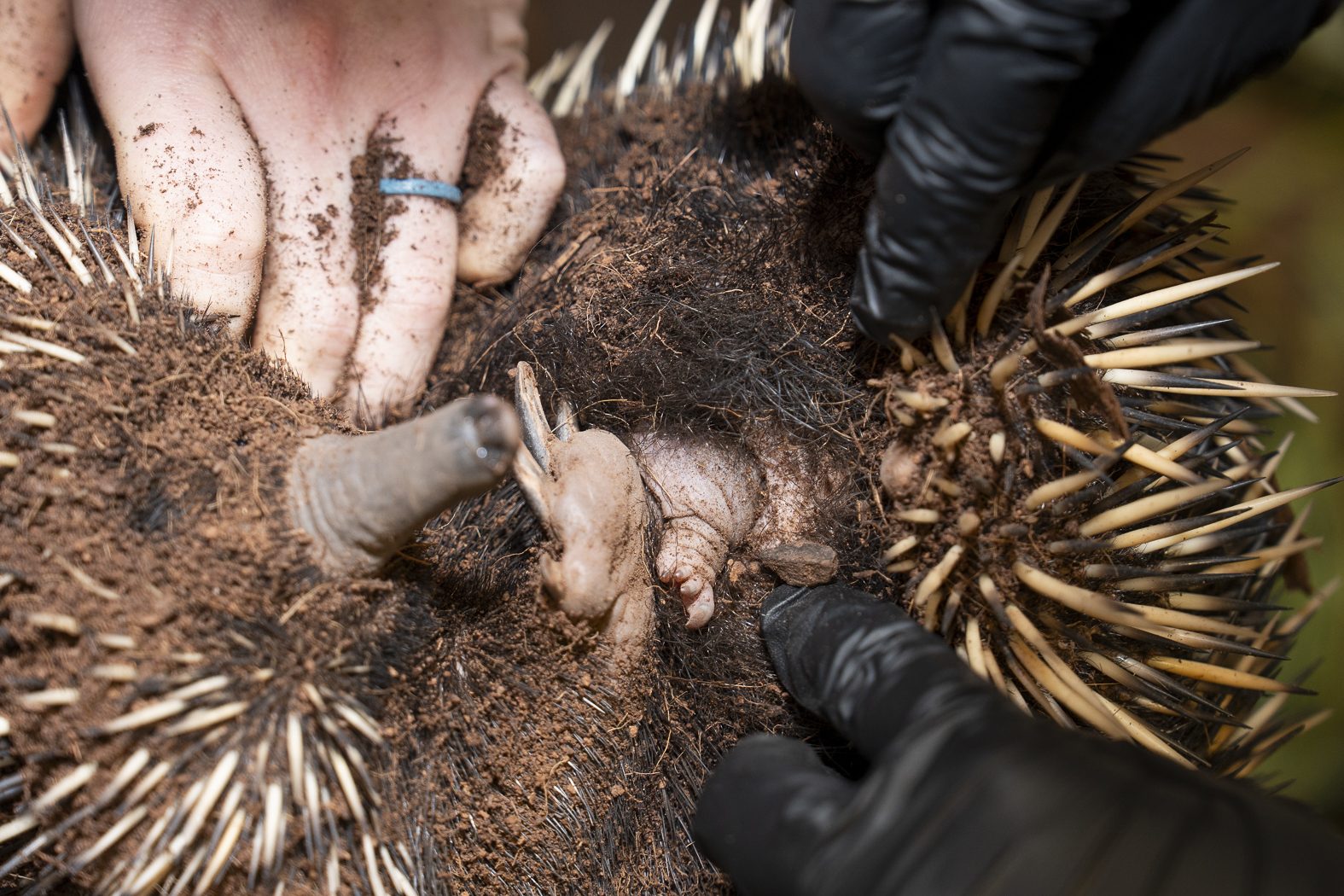
The next expected milestone was deposition into a burrow.
On February 6, 2026, at approximately 65 days old, the team observed the puggle emerging from Edna’s pouch and weighing 250 grams. In the days that followed, the puggle transitioned in and out of the pouch until the young echidna grew too large for the pouch and began developing visible spines.
This milestone marked the first time a puggle at the Columbus Zoo progressed beyond this critical development threshold.
“This puggle is doing very well,” Amber said. “We’re seeing growth, and the behavior from Edna and her puggle looks exactly like what we want to see at this stage.”
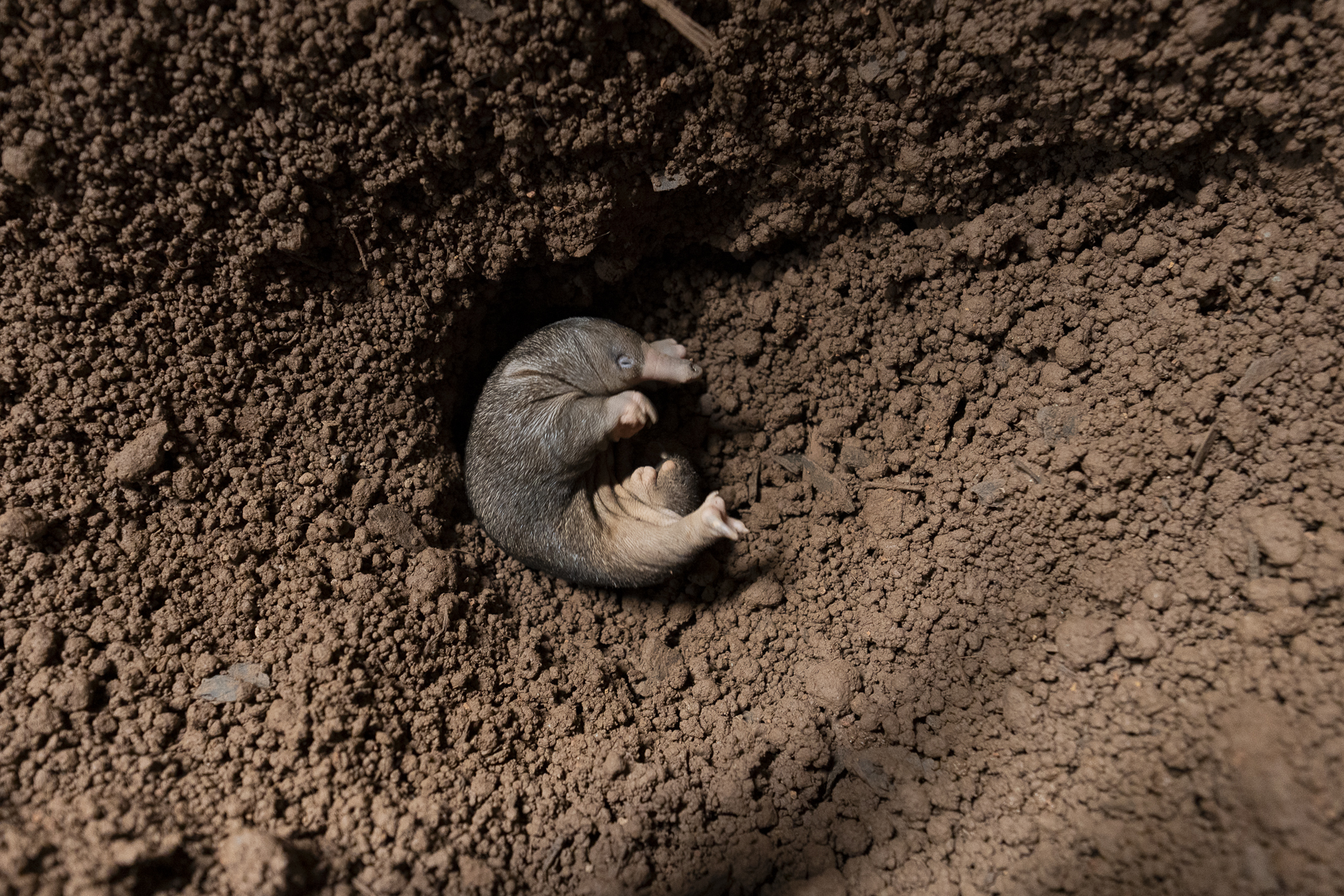
Today, the puggle continues to grow and meet expected developmental benchmarks. Edna remains attentive and is often found resting in the same burrow as her young. For now, Edna, Elonzo, and the puggle are not participating in outreach programming, allowing for the quiet time needed during this stage of development.
Because relatively few institutions breed echidnas, each documented milestone contributes to a broader understanding of the species in professional care. The Columbus Zoo remains in communication with fellow AZA-accredited facilities and international colleagues to compare maternal behaviors, environmental variables, and developmental timelines.
“It’s so rewarding to see what the team has accomplished. We’ve worked really hard and learned so much along the way,” Emily said.
As the puggle continues to grow, documentation and collaboration will continue, contributing to the collective knowledge surrounding echidna reproduction in professional care. This milestone reflects the dedication of the Zoo’s Animal Care team and the continued commitment to advancing understanding of this fascinating species.