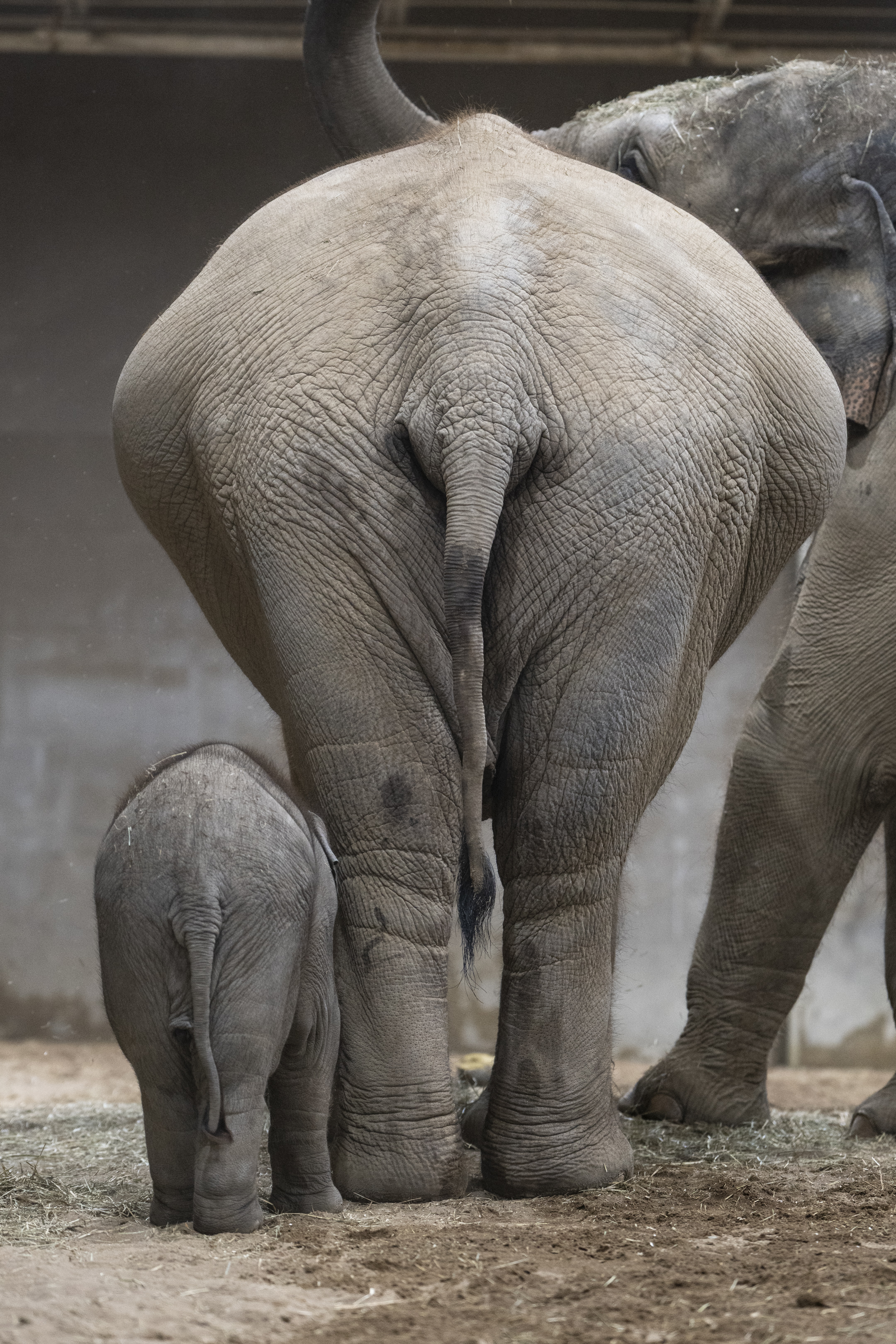
When two Asian elephant calves are born in the same season, something truly special happens. Guests visiting the Columbus Zoo and Aquarium can now watch a growing elephant family navigate motherhood, early learning, and social bonding in real time.
This unique moment gives families an unforgettable view into elephant development and helps visitors understand the importance of social structure, maternal care, and long-term conservation for this endangered species.
With both calves thriving alongside their mothers and the rest of the herd, the Columbus Zoo is learning right along with them and sharing that story with guests who stop by the habitat.
Let’s take an inside look at what the elephant care team is seeing each day, from maternal differences and playful calf behavior to the herd cooperation that makes this dual-calf chapter so inspiring.
Differing Mothering Styles
Phoebe’s Maternal Style. Phoebe brings years of experience into motherhood, and her instincts show it. As a six-time mother, she has a natural protective nature and pays close attention to anything that might affect Oliver’s safety or comfort.
- Emotional Tone: Phoebe historically has been described as a "helicopter mom" being overly protective of her calves. However, with the new dynamics that two calves bring, she is allowing Ollie a lot more “freedom” than historically as he and his sister hit it off.
- Values & Priorities: She emphasizes social norms and doing things “the right way.” Her maternal style reflects a desire for Ollie to behave appropriately.
- Behavioral Traits: She may hover or micromanage, which has been shown in the past, by keeping calves close to her at all times.
Sunny’s Maternal Style. Sunny approaches motherhood with a more relaxed, nurturing personality.
- Emotional Tone: Sunny is very confident in her environment and is a playful elephant herself. She allows Rita Jean a large space to explore and play, leading to a very confident calf.
- Values & Priorities: Her maternal style encourages Rita Jean to explore and develop her own identity by not being overly protective and having trust in the elephant team and her environment.
- Behavioral Traits: Sunny is more permissive and supportive, offering guidance to Rita Jean without imposing rigid control. She allows Rita Jean the ability to test her environment by having trust in Aunt Rudy (Sunny's sister) to come to the rescue when needed. This means you will see her stray far away from the adults and have complete comfort around the animal care team.
Growing More Confident as Mothers
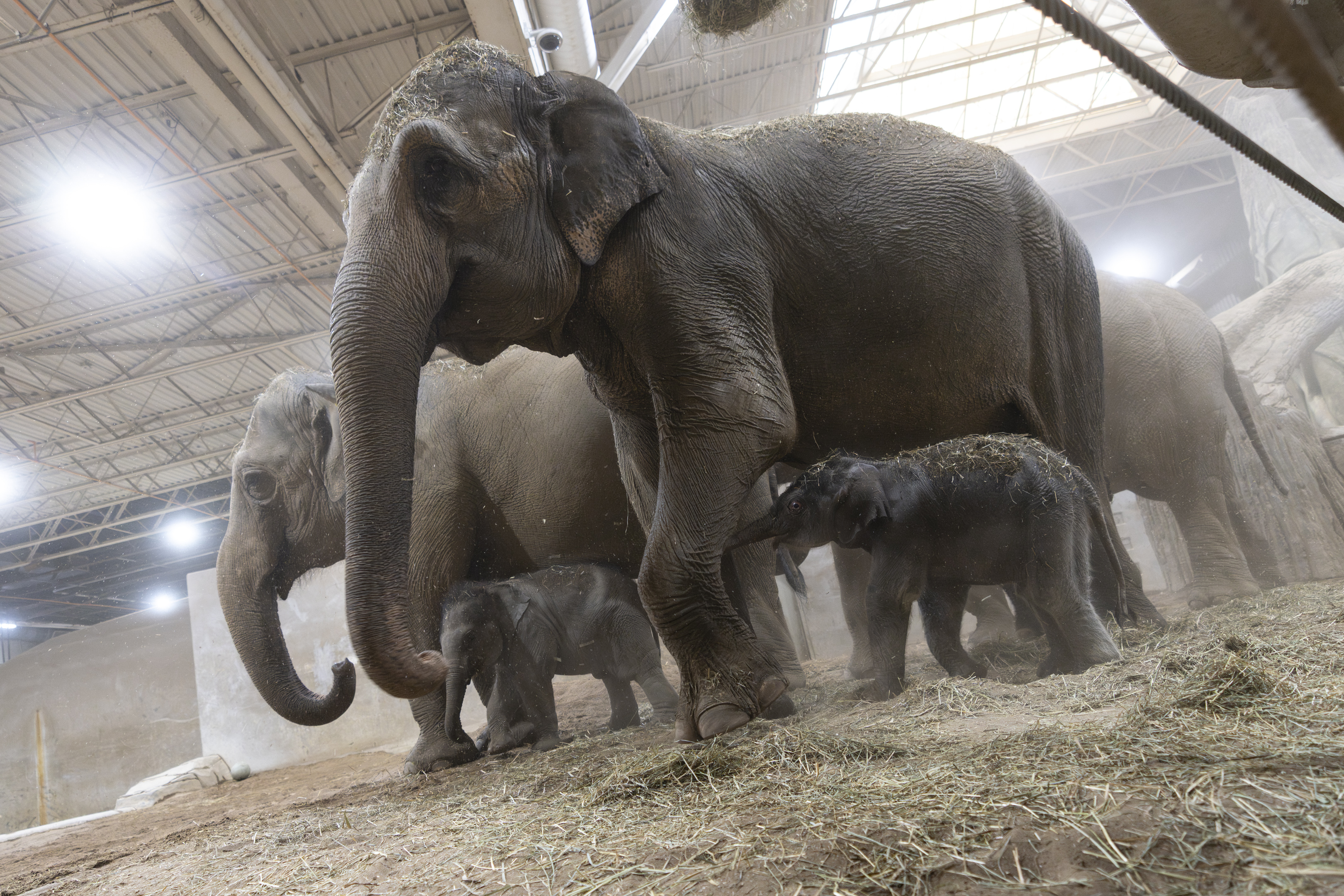
Sunny has grown significantly as a first-time mom. She has learned how to manage play and adjust nursing routines as needed. Phoebe’s experience shows in her calm responses and dependable instincts.
Both calves are becoming more independent, and, because of that, they have started venturing farther from their mothers, initiating play with the herd (and each other), and exploring the indoor and outdoor habitats with growing confidence.
Meet Rita Jean and Ollie!
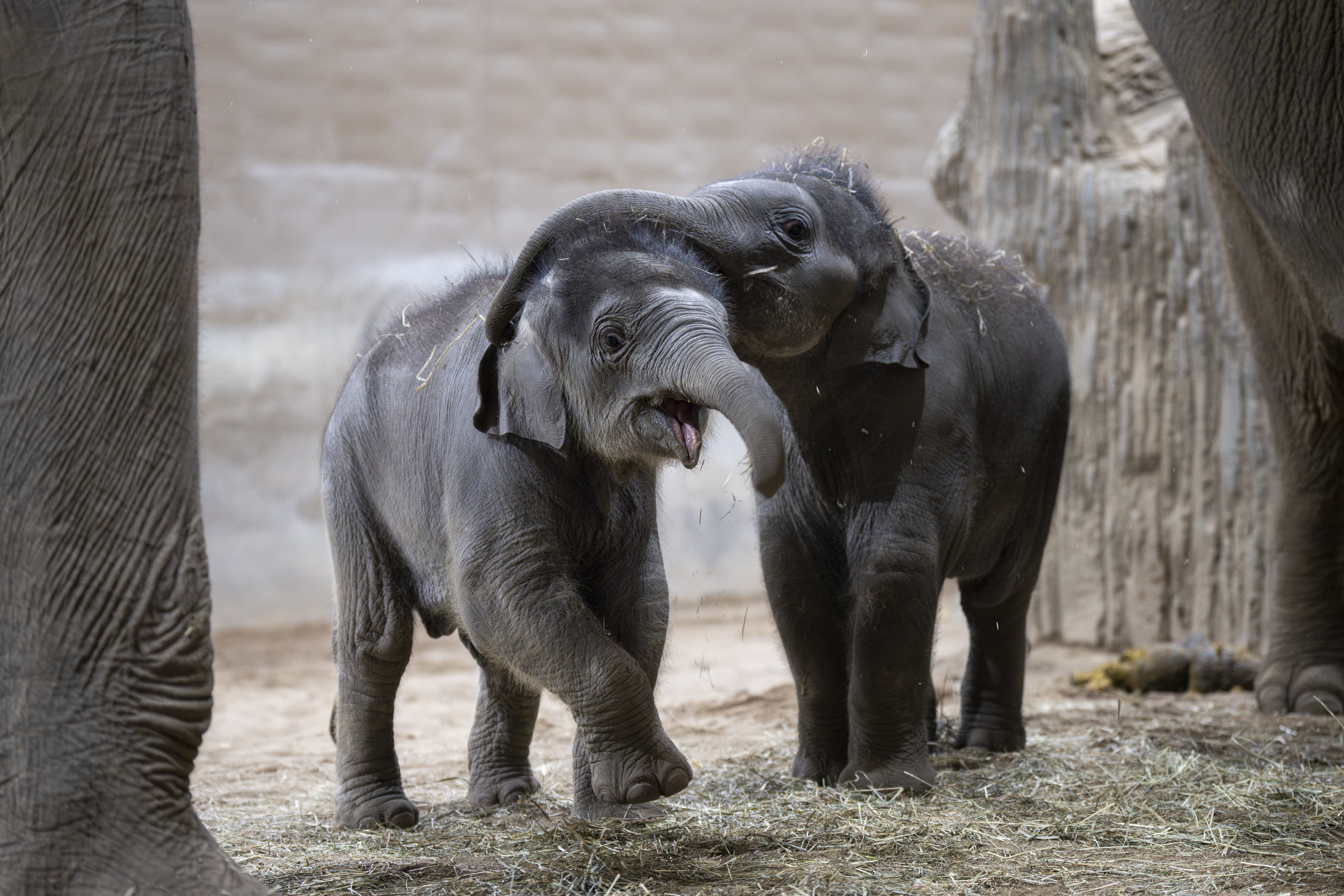
Calf Interaction and Play. With two calves in the habitat, a new social unit has formed right before our eyes! Rita Jean and Oliver spend much of their day practicing key behaviors that help young elephants build resiliency and social skills.
Their playtime includes:
- Climbing...their favorite past time and playing "king of the mountain" on sand piles
- Mock charges and trunk wrestling
- Short bursts of running
- Gentle nudges and coordinated movement
- Explorations that help them learn from each other
Their friendship also gives the mothers short breaks while also keeping the herd alert to two energetic youngsters moving in every direction!
Milestones Reached So Far
The calves are already reaching early developmental milestones, including:
- Bonding strongly with their mothers
- Responding to vocal cues
- Following their mothers with growing coordination
- Engaging in social play that builds physical and social skills, such as playing with “boomer balls”, climbing and pushing on each other
- Accepting guidance from other females in the herd. In new situations, such as playing in the snow for the first time, the adults will circle up and ensure the calves are “protected” until they are all confident this first-time experience is safe for the calves.
Nursing Schedules and Sleep
Rita Jean and Ollie typically nurse every one to two hours, and both mothers have settled into a rhythm that works for their own calf. Sometimes nursing is staggered, but other times, the calves nurse side-by-side when Phoebe and Sunny stand together.
Sleep follows the same natural cycles, with the calves lying down for thirty to sixty minutes at a time, but up to several hours. Recently, the care team has seen more moments where the entire herd lies down together, a sign of increasing trust and comfort within the group.
Growing Personalities
Each calf is showing a unique personality. Rita Jean is bold and adventurous, often the first to investigate something new or initiate play. Ollie is more cautious and tends to stay close to his mom until he feels comfortable exploring. As they get older, both calves love playing with each other and the enrichment the team provides for them…to the delight of thousands of Zoo guests daily.
Mothers learn to adapt their protective strategies based on the calf’s temperament.
For example.
- A curious calf teaches mom to be more vigilant and flexible.
- A shy calf teaches mom to slow down and provide reassurance.
What the Care Team has Learned
Years of experience matter when you’re preparing for something as rare and meaningful as welcoming elephant calves. With decades of combined expertise and firsthand experience supporting previous births, the elephant care team approached this moment with thoughtful preparation and steady confidence. And, with a nearly two-year gestation, there was time to plan, train, and anticipate what life might look like with two calves arriving in the same year.
Going into this chapter, the elephant care team planned for potential challenges. Instead, the herd has shown remarkable cooperation!
Even with differing parenting styles, Phoebe and Sunny are working together more smoothly than expected.
- There is strong participation and support from the entire herd
- Aunt Rudy has stepped in to supervise both calves at times
- There’s a calm, cohesive herd atmosphere, even with two energetic youngsters!
Helping Guests Understand Elephant Social Structure
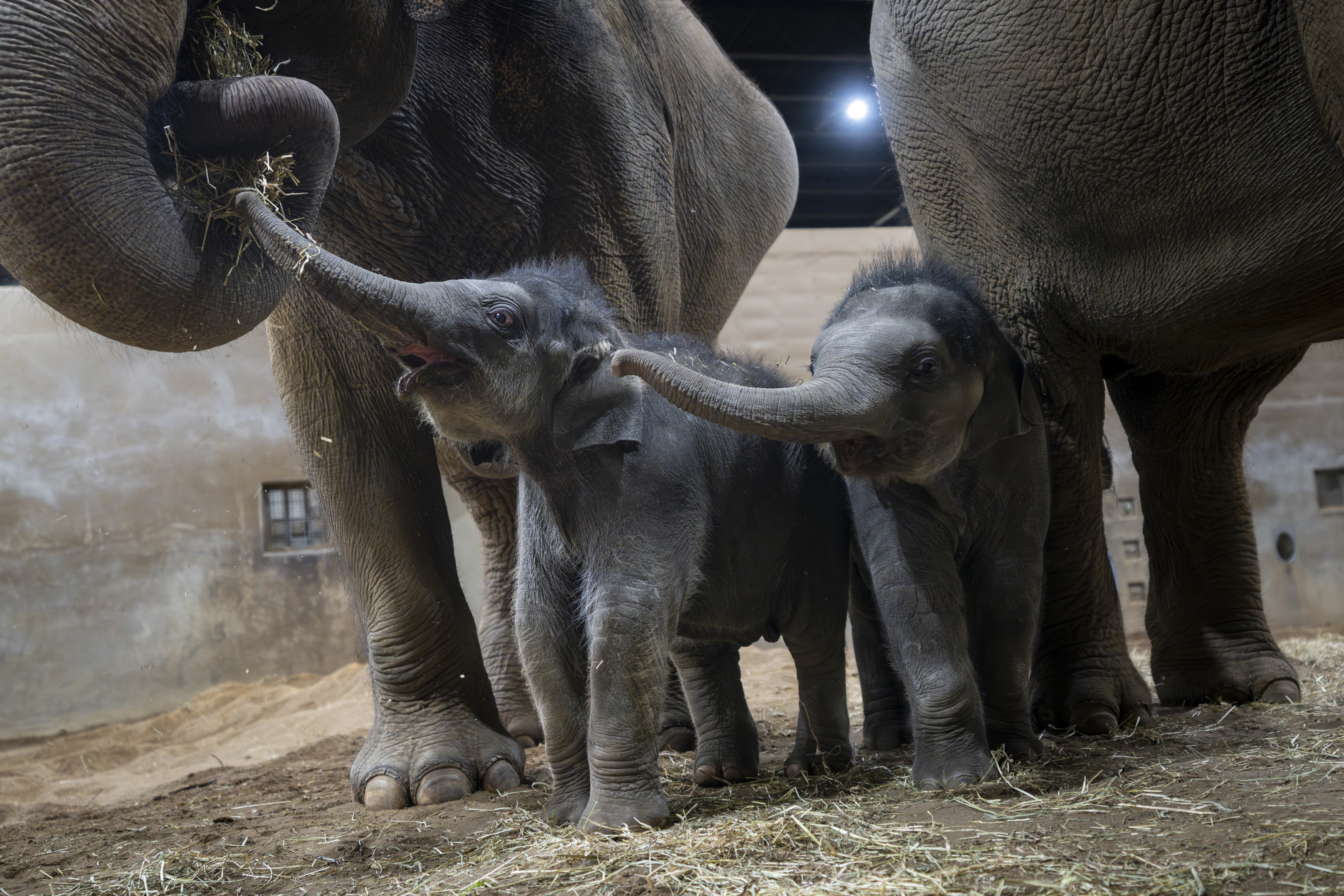
Watching two calves at once gives families a vivid look at real elephant society.
Guests will regularly see:
- Maternal Care. Nursing, protection, and teaching.
- Allomothering. Other females supporting and helping.
- Social Learning. Calves copying behavior.
Elephants are deeply social animals that rely on strong family ties for survival, and watching two calves grow up together makes that clearer than ever. Their presence reveals how the herd naturally shares responsibilities, with older siblings (like Frankie) and other females (like Aunt Rudy) stepping in to help guide, protect, and teach.
Guests who spend time at the habitat quickly see that elephants thrive in complex social systems, where every member plays a meaningful role in raising the young and supporting the herd!
Why These Calves Matter So Much
Asian elephants are endangered, with fewer than 50,000 remaining in their native ranges due to habitat loss and poaching. Every birth in professional care matters—not only for the individual calf, but for the future of the entire species.
Here at the Columbus Zoo, we’re working hard to change the story. Our team leads the AZA SAFE: Asian Elephant program, an initiative that leverages collective expertise to protect the species’ future. We also support field conservation through the International Elephant Foundation, and we also play a pivotal role in fighting the Elephant Endotheliotropic Herpesvirus (EEHV) through diagnostic testing and national collaboration.
Most recently, we helped establish the Center for Species Survival for Asian Elephant (CSS Asian Elephant)—the first of its kind in the world that focuses on this species—located in India, at the heart of the species' native range. This global partnership is uniting researchers, veterinarians, and conservationists to create a better future for elephants everywhere.
Visit the Herd!
Rita Jean and Oliver are growing up in a supportive, socially-rich environment filled with learning, play, and shared caregiving. Each day brings new discoveries for the calves, the mothers, the rest of the herd, and the staff who care for them.
Guests who visit the Columbus Zoo and Aquarium are witnessing something rare and deeply meaningful...Two calves learning together show exactly why elephant families matter, both here at the Zoo and in protected habitats around the world.
We are grateful for every guest who visits, supports conservation, and helps protect elephant families everywhere.
Visit the Columbus Zoo Learn More about Asian Elephants Baby Elephant Updates